

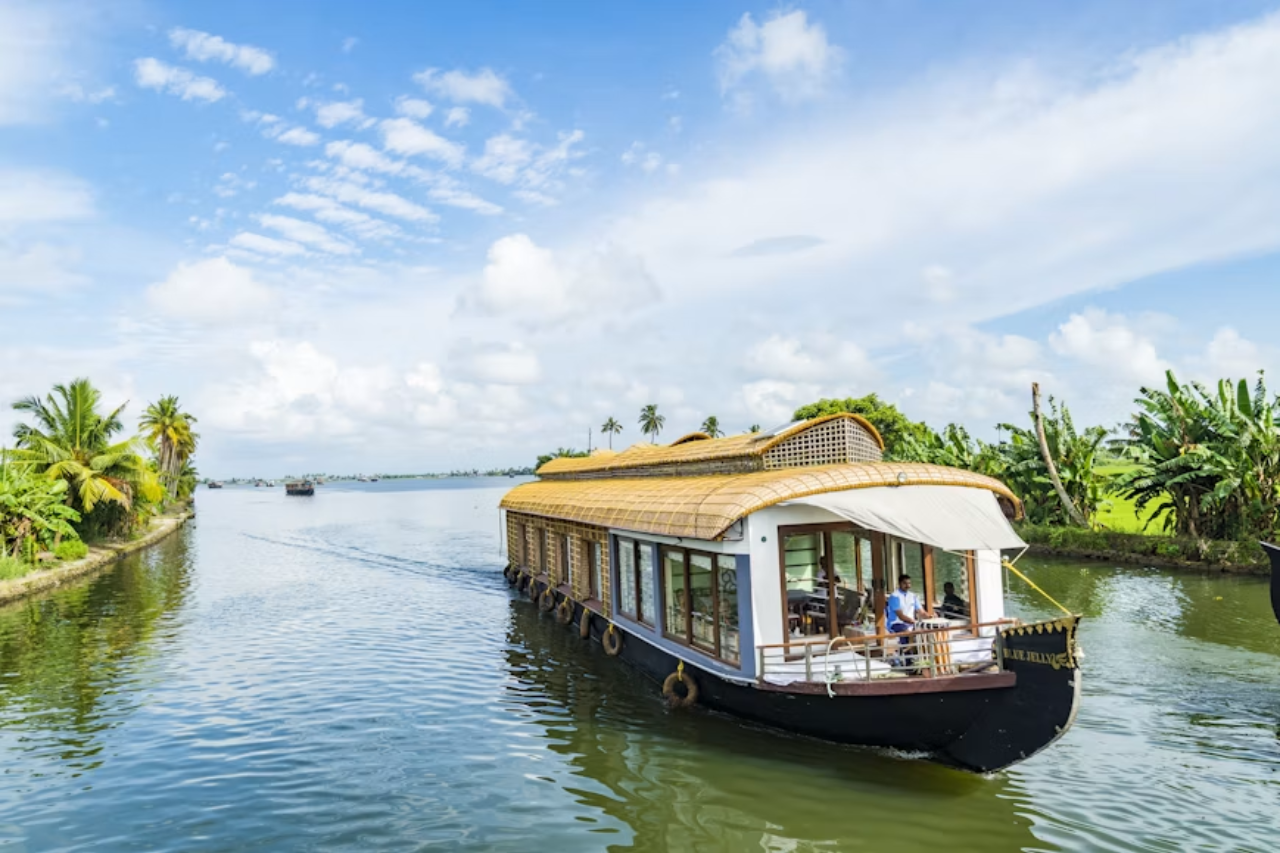
Golden Triangle vs South India: Which Is Right for You?
If you’ve decided India is your next destination, you’ve already made a great choice. The harder question — the one that stumps even seasoned travelers — is which India do you want to experience first?
Two routes consistently top the list for first-time visitors: the iconic Golden Triangle in the north, and the lush, temple-dotted landscapes of South India. Both are extraordinary. Both are distinctly Indian. And yet they feel like entirely different countries. One gives you mighty Mughal forts, desert sunsets, and the Taj Mahal at sunrise. The other offers ancient Dravidian temples, serene backwater houseboats, and some of the most flavorful food on the subcontinent.
So which one is right for you? The answer depends on what kind of traveler you are — and this guide will help you figure that out.
What Is the Golden Triangle?
The Golden Triangle is India’s most famous tourist circuit, connecting three cities in northern India: Delhi, Agra, and Jaipur. The “triangle” refers to the rough geographic shape formed when you draw a line between the three cities on a map.
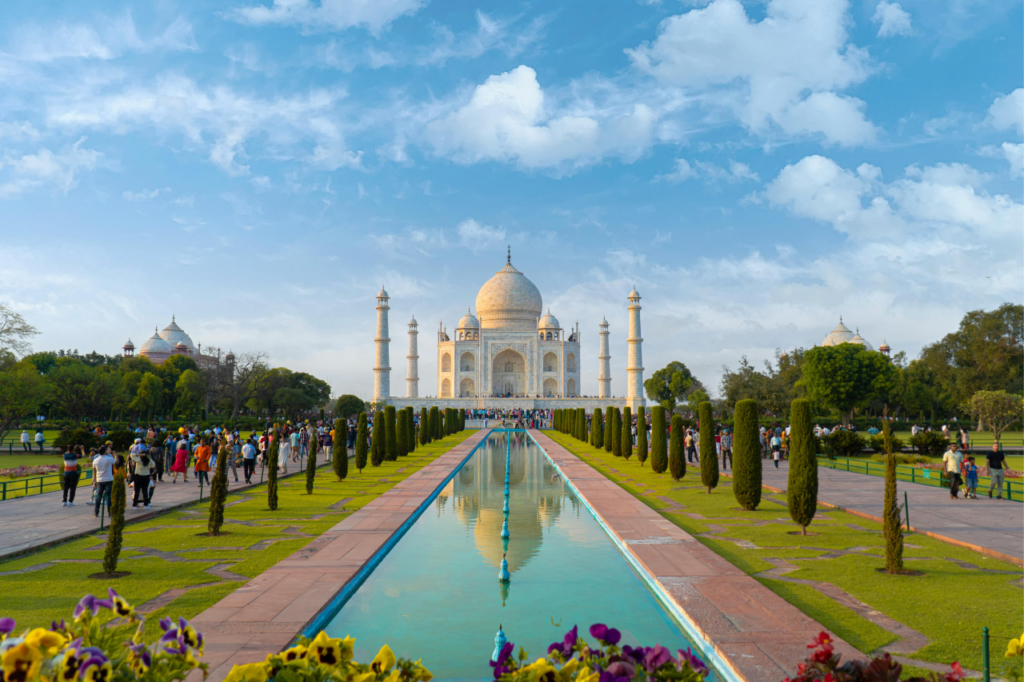
It’s the most popular route for first-time visitors to India — and for good reason. In just 7 to 10 days, you can experience the chaotic energy of Old Delhi, stand in front of the Taj Mahal (which genuinely takes your breath away no matter how many photos you’ve seen of it), and wander through the rose-tinted palaces and bazaars of Jaipur.
Many travelers also extend the Golden Triangle into Rajasthan — adding Udaipur, Jodhpur, Jaisalmer, or Ranthambore — turning it into a 12–15 day journey through India’s most cinematic landscapes. Acqua Travel’s North Indian Treasures and Cultural India tours are built around exactly this kind of experience.
Golden Triangle Highlights
- The Taj Mahal, Agra — one of the world’s most iconic monuments
- Red Fort and Qutub Minar, Delhi
- Amber Fort and Hawa Mahal, Jaipur
- Bustling bazaars of Chandni Chowk and Johari Bazaar
- Desert landscapes, camel safaris, and royal heritage hotels in Rajasthan
- Tiger spotting at Ranthambore National Park
What Is South India?
South India covers the states of Tamil Nadu, Kerala, Karnataka, and Andhra Pradesh — a vast region that feels worlds apart from the north. The Mughal influence that shaped so much of northern India barely touched the south, which developed its own architecture, cuisine, language, classical arts, and religious traditions over thousands of years.
South India is quieter, greener, and in many ways more relaxed than the northern circuit — but it’s just as rich with things to see and do. Ancient Dravidian temples with towering gopurams (gateway towers), misty tea plantations in the Nilgiris, backwater cruises through Kerala’s network of canals, and coastal towns where fresh seafood is grilled right on the beach.
Acqua Travel’s Essential South India and Golden Triangle & South India Paradise tours are perfect starting points for exploring this region.
South India Highlights
- Kerala’s backwaters — houseboat cruises through palm-fringed canals
- Meenakshi Amman Temple, Madurai — one of India’s most spectacular temple complexes
- Brihadeeswara Temple, Thanjavur — a UNESCO World Heritage Site
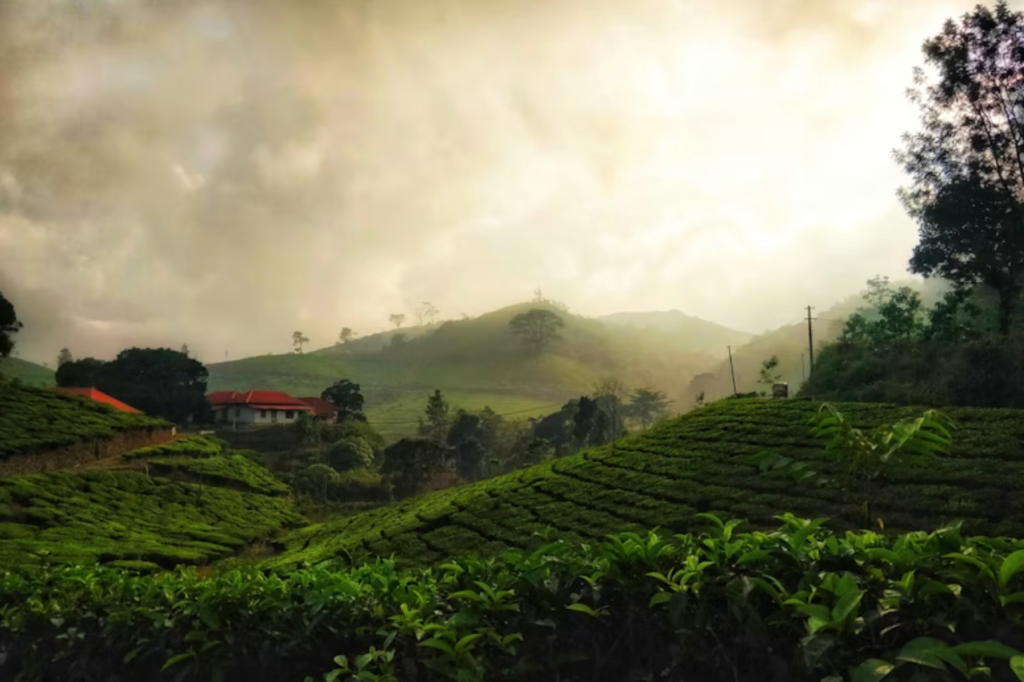
- Tea and spice plantations of Munnar and Thekkady
- Ayurvedic wellness retreats in Kerala
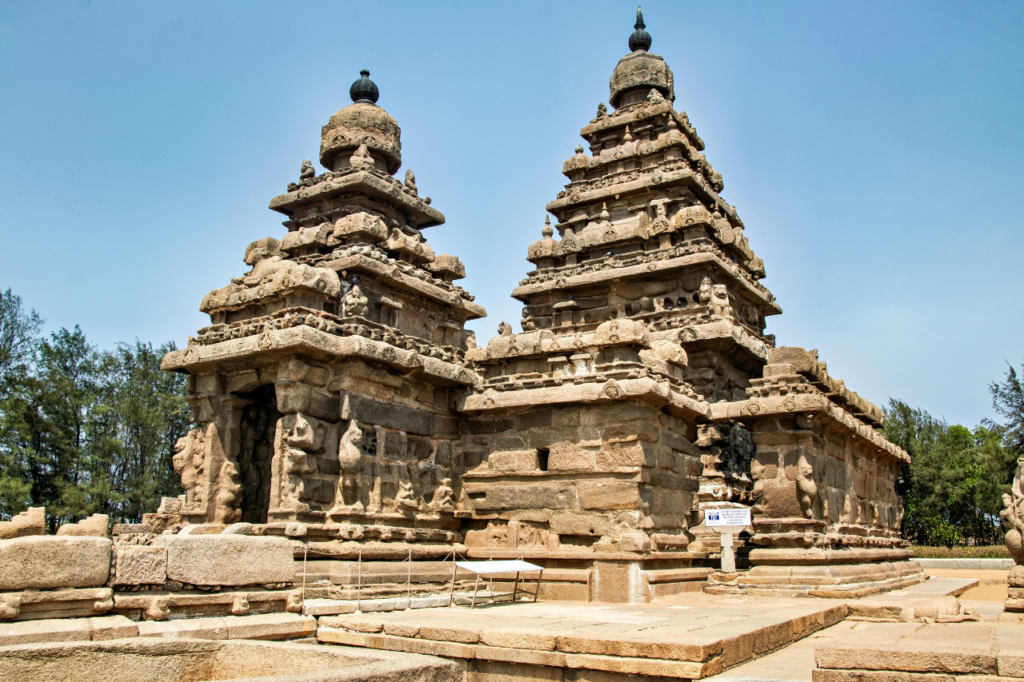
- Mahabalipuram’s ancient shore temples and rock carvings
- Mysore Palace and the Dussehra festival celebrations
- Beaches of Kovalam, Varkala, and Pondicherry
Golden Triangle vs South India: A Side-by-Side Comparison
1. Type of Experience
Golden Triangle: History, heritage, and grandeur. The north is where India’s most dramatic chapters of history — the Mughal Empire, the Rajput kingdoms, the British Raj — left their mark in stone. If you’re drawn to monumental architecture, royal palaces, and the thrill of bustling market streets, the north is your match.
South India: Nature, spirituality, and culture. The south is where ancient Dravidian civilization flourished, and it shows — in elaborately carved temples that have stood for over a thousand years, in classical dance forms like Bharatanatyam, and in a slower, more contemplative travel pace. If you want to float through backwaters, sip fresh toddy by the coast, or unplug with an Ayurvedic retreat, the south is calling.
2. Best Time to Visit
Golden Triangle: October to March is ideal. The north gets brutally hot from April through June (temperatures in Delhi and Rajasthan can exceed 45°C/113°F), and the monsoon brings humidity. Winter months offer crisp, comfortable sightseeing conditions.
South India: October to February is best for most of the region. Kerala gets two monsoon seasons (June–August and October–November), which transform it into a vivid green paradise — beautiful to see, but travel can be affected. The east coast (Tamil Nadu) is best avoided during November when it receives its own northeast monsoon.
The short answer: if you’re traveling between October and March, both regions are in excellent condition. Outside that window, South India holds up better.
3. Duration Needed
Golden Triangle: 7 days at minimum for Delhi–Agra–Jaipur. Allow 12–15 days if you want to extend into Rajasthan, which is highly recommended.
South India: 10–14 days to cover the highlights comfortably. The distances between key destinations like Chennai, Madurai, Thekkady, Alleppey, and Kochi are manageable but require pacing.
If you have less than 10 days, the Golden Triangle is the better fit. If you have two weeks or more, South India rewards the time.
4. Food
Golden Triangle (North India): Rich, creamy curries, tandoori meats, buttery dal makhani, and endless varieties of flatbreads — naan, roti, paratha. North Indian cuisine is what most of the world pictures when they think “Indian food.” Street food in Delhi’s Chandni Chowk alone could fill a week of delicious research.
South India: A revelation for many first-timers. Rice-based meals, thin and crispy dosas, fluffy idlis, tangy sambar, coconut-laced curries, and some of the finest seafood in Asia. The cuisine here is generally lighter and uses coconut milk, tamarind, and curry leaves in ways the north rarely does. South India is also a paradise for vegetarians.
Verdict: Both are exceptional. If you’re a bread-and-butter (literally) curry lover, go north. If you’re adventurous and love seafood and spice, go south.
5. Crowds and Tourism Infrastructure
Golden Triangle: More visited, better tourist infrastructure. English is widely spoken, guides are plentiful, and the circuit is extremely well-worn — meaning it’s easy to navigate even for first-timers, but some sites (especially the Taj Mahal) can feel crowded during peak season.
South India: Fewer international tourists, which means more authentic interactions and less hustle around the main sites. Infrastructure is strong in Kerala and major Tamil Nadu cities, but some smaller temple towns require a bit more planning.
6. Wildlife
Golden Triangle: Ranthambore National Park is one of India’s best places to spot Bengal tigers in the wild, making it a popular add-on to a Jaipur visit. Jim Corbett National Park in Uttarakhand is also reachable from Delhi.
South India: Thekkady (Periyar National Park) offers excellent elephant and leopard spotting, while Wayanad and Bandipur also deliver rich wildlife encounters. South India’s forests tend to be denser, which makes sightings more of a treasure hunt — but no less rewarding.
7. Beaches
Golden Triangle: None on the standard circuit, though Goa is accessible as an add-on from Mumbai and makes a great finale to a north India tour.
South India: Exceptional beach access is built right into the route — Kovalam, Varkala, Pondicherry, Rameswaram, and the Andaman Islands for those who want to extend further.
So, Which Is Right for You?
Here’s a simple way to decide:
Choose the Golden Triangle if you…
- Are visiting India for the first time and want the “greatest hits” experience
- Are fascinated by Mughal history, royal palaces, and grand architecture
- Love the energy of busy bazaars, street food, and city exploration
- Have 7–12 days available
- Are traveling between October and March
- Want to add a wildlife safari or desert experience to your trip
Choose South India if you…
- Want something off the beaten path compared to the classic north India circuit
- Are drawn to ancient temples, classical arts, and Dravidian culture
- Love beaches, nature, and slower-paced travel
- Are interested in wellness, Ayurveda, or a yoga retreat
- Have 10–14 days available
- Are a food lover, especially if you enjoy seafood or vegetarian cuisine
- Are traveling during shoulder season and want to avoid peak-season crowds
Can’t choose? Do both. Acqua Travel’s Golden Triangle & South India Paradise tour combines the iconic north with the lush south in a single 14-day custom itinerary — and it’s one of the most popular routes we build for first-time visitors who don’t want to leave anything on the table.
Final Thoughts
Neither the Golden Triangle nor South India is “better” — they’re simply different expressions of India’s extraordinary depth. The north dazzles with scale and history. The south enchants with texture and tranquility. Both will change how you see the world.
The best thing you can do is talk to someone who knows both well. Our India destination experts at Acqua Travel have helped hundreds of first-time visitors figure out exactly which route — or which combination — fits their travel style, timeline, and budget.
Ready to start planning? Request a custom India itinerary and let us do the heavy lifting. All you have to do is show up.
FAQs
Is the Golden Triangle good for first-time visitors to India?
Yes — it’s the most popular starting point for first-timers because it packs three iconic cities and the Taj Mahal into a manageable 7–10 day circuit with excellent tourism infrastructure.
How long does the Golden Triangle tour take?
A classic Golden Triangle tour covers Delhi, Agra, and Jaipur in about 7 days. Extending into Rajasthan — adding Udaipur, Jodhpur, or Jaisalmer — takes 12–15 days and is highly recommended.
Is South India good for first-time visitors?
Absolutely. South India is actually a great choice for travelers who want fewer crowds, richer cultural immersion, and more diverse landscapes — from temples and tea plantations to beaches and backwaters.
What is the best time to visit South India?
October to February is the most comfortable time to visit most of South India. Kerala is also uniquely beautiful during the monsoon (June–August) if you don’t mind occasional rain and want lush, dramatic scenery.
Can I combine the Golden Triangle and South India in one trip?
Yes, and it makes for an incredible journey. Most combined itineraries run 14–18 days, typically starting in Delhi, moving through the north, then flying down to Chennai or Kochi to explore the south. Acqua Travel can custom-build this route to match your pace and interests.
Which is better for food — Golden Triangle or South India?
Both are outstanding, just very different. North India is known for rich curries, tandoori dishes, and street food culture. South India is celebrated for its dosas, seafood, coconut-based cuisine, and incredible variety of vegetarian options.
Related Posts