
Tokyo Neighbourhood Guide: Where to Stay and What to Do in Shinjuku, Shibuya, Asakusa and More
Tokyo is not one city but a patchwork of distinctive neighbourhoods, each with its own personality, pace and appeal. A smart Tokyo neighbourhood guide helps first‑time visitors to Japan, decode this complexity, matching the right district to their travel style.
Whether you want neon‑lit nightlife, tranquil temples, cutting‑edge fashion or vintage vinyl shops, Tokyo has a neighborhood that delivers. The challenge is knowing where to base yourself and which districts deserve day trips versus overnight stays.
This comprehensive Tokyo neighbourhood guide breaks down the essentials for Shinjuku, Shibuya, Asakusa, Harajuku, Ginza and several other key areas, with practical advice on where to stay, what to see and how each neighborhood fits into your wider Tokyo itinerary.
Shinjuku: Tokyo’s Central Hub
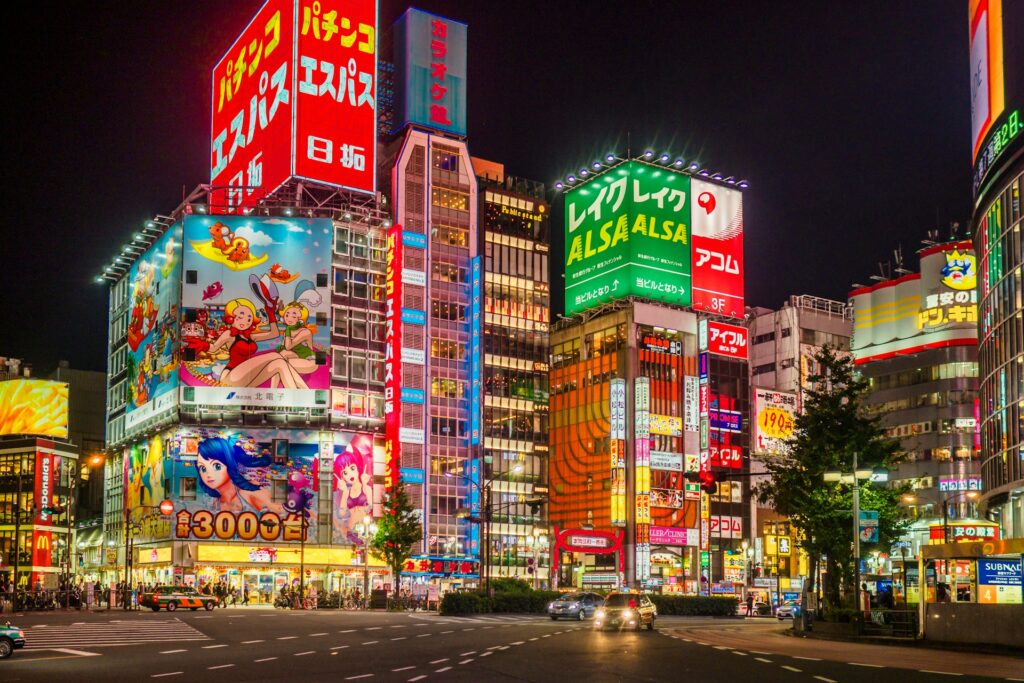
If you read any Tokyo neighbourhood guide, Shinjuku consistently appears near the top for first‑time visitors, and for good reason: it is impossibly well‑connected, packed with hotels at every price point and never boring.
Why Stay in Shinjuku
Shinjuku Station is the world’s busiest train hub, linking the Yamanote Line, Chuo Line, several private railways and multiple subway lines. From here, virtually any corner of Tokyo is 20–30 minutes away, making it ideal for travellers who want one base for their entire trip.
The area mixes skyscrapers, department stores, izakaya‑lined alleys and peaceful parks. West Shinjuku is dominated by high‑rise hotels and offices; East Shinjuku is home to the neon chaos of Kabukicho, Tokyo’s main entertainment and red‑light district.
What to Do in Shinjuku
- Walk the narrow lanes of Golden Gai, where tiny bars squeeze into two‑storey wooden buildings.
- Visit the free observation decks at the Tokyo Metropolitan Government Building for skyline views.
- Explore Omoide Yokocho (Memory Lane) for grilled yakitori and retro atmosphere.
- Shop in massive department stores like Isetan, Lumine and Takashimaya.
- Escape to Shinjuku Gyoen, one of Tokyo’s most beautiful parks, with traditional Japanese, French and English garden styles.
For anyone building their first Tokyo neighbourhood guide itinerary, Shinjuku offers the easiest logistics and the widest range of food, shopping and nightlife within walking distance of your hotel.
Shibuya: Youth, Energy and the Famous Crossing
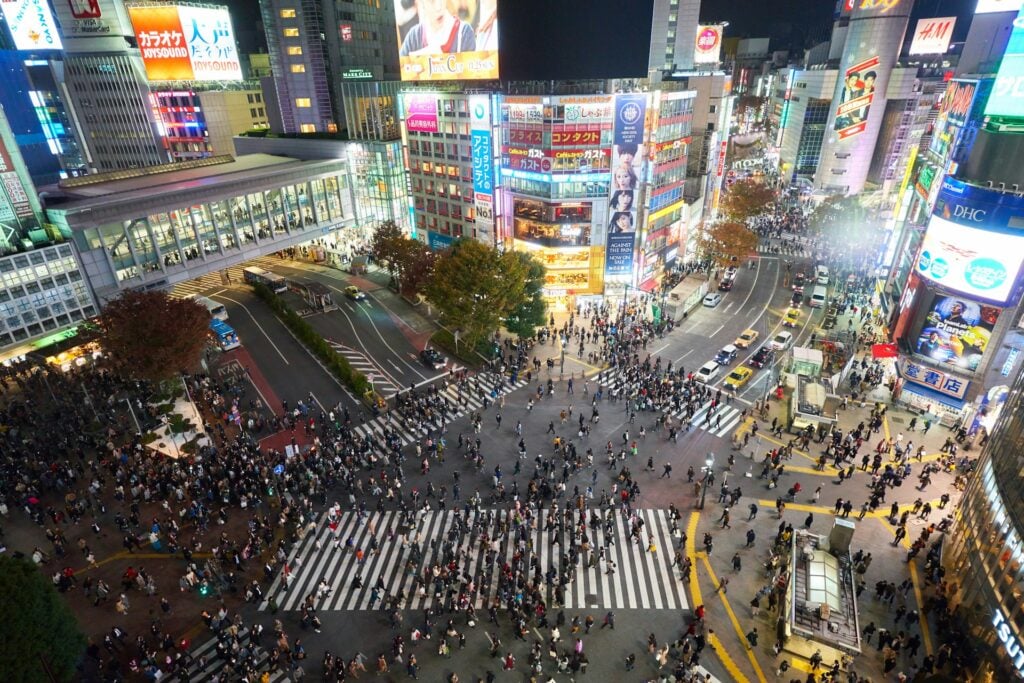
Shibuya is Tokyo’s beating heart of youth culture, streetwear fashion and relentless energy. Every Tokyo neighbourhood guide mentions the Shibuya Crossing – the world’s busiest pedestrian intersection – but the district offers far more than one photo‑op.
Why Stay in Shibuya
Shibuya combines excellent train connections (JR Yamanote Line, multiple subway lines and private railways) with a buzzing street scene. Hotels here put you close to nightlife, shopping and easy walks to Harajuku, Omotesando and Daikanyama.
The area is especially popular with younger travellers and anyone drawn to trendy cafés, record shops, rooftop bars and late‑night izakayas.
What to Do in Shibuya
- Stand at the Shibuya Crossing and watch waves of pedestrians flood the intersection every light cycle.
- Visit the Hachiko statue, Tokyo’s most famous meeting point, memorialising the loyal dog who waited for his owner.
- Climb to Shibuya Sky, the rooftop observation deck on Shibuya Scramble Square, for 360‑degree city views.
- Browse the multi‑floor department stores, fashion boutiques and pop‑culture shops of Center Gai and Shibuya 109.
- Explore Miyashita Park, a rooftop shopping and dining complex with green space, skate park and street‑food vendors.
When creating your personal Tokyo neighbourhood guide, Shibuya makes sense if you want to be in the thick of Tokyo’s modern, youthful energy and do not mind crowds and noise.
Asakusa: Old Tokyo Charm
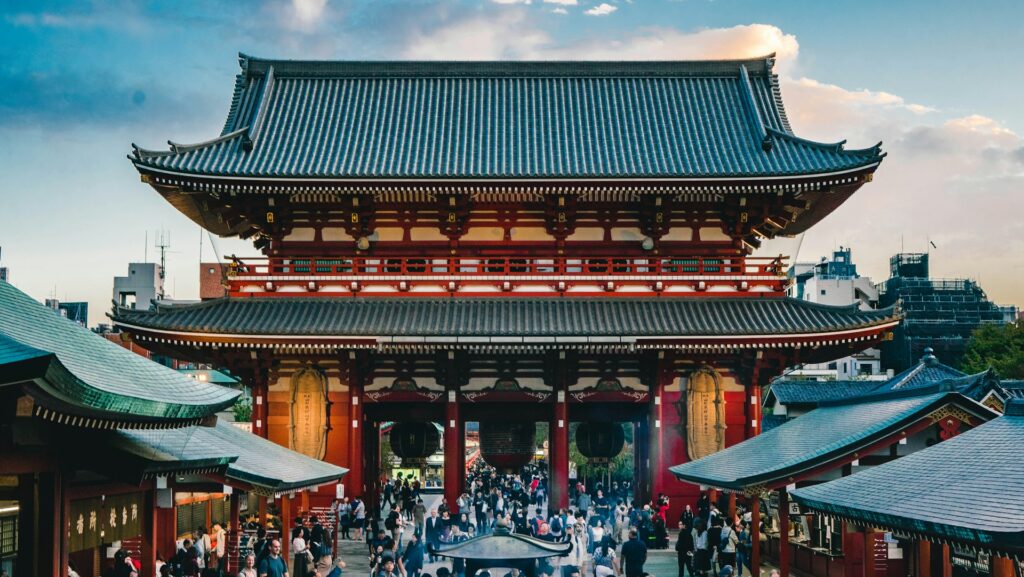
While Shinjuku and Shibuya represent modern Tokyo, Asakusa offers a window into the city’s past. A well‑rounded Tokyo neighbourhood guide always includes this historic district for its temples, traditional streets and slower pace.
Why Stay in Asakusa
Asakusa is quieter, more affordable and less crowded than central hubs. Hotels here often have a traditional feel, with tatami rooms, public baths and views over low‑rise streets.
The area has decent subway and Tobu Line connections, plus boat piers for cruises down the Sumida River to Tokyo Bay or upstream to parks and museums.
What to Do in Asakusa
- Visit Senso‑ji Temple, Tokyo’s oldest Buddhist temple, approaching through the grand Kaminarimon (Thunder Gate) with its massive red lantern.
- Stroll Nakamise‑dori, the shopping street leading to the temple, lined with stalls selling traditional snacks, crafts and souvenirs.
- Walk along the Sumida River for views of Tokyo Skytree across the water.
- Explore side streets filled with small restaurants serving tempura, soba and old‑school kissaten (coffee shops).
- Try a rickshaw ride for a guided tour through narrow lanes and photo stops at historic buildings.
If your Tokyo neighbourhood guide prioritises atmosphere over convenience, Asakusa delivers a very different side of the city that pairs beautifully with visits to more modern districts.
Harajuku and Omotesando: Fashion, Youth and Design
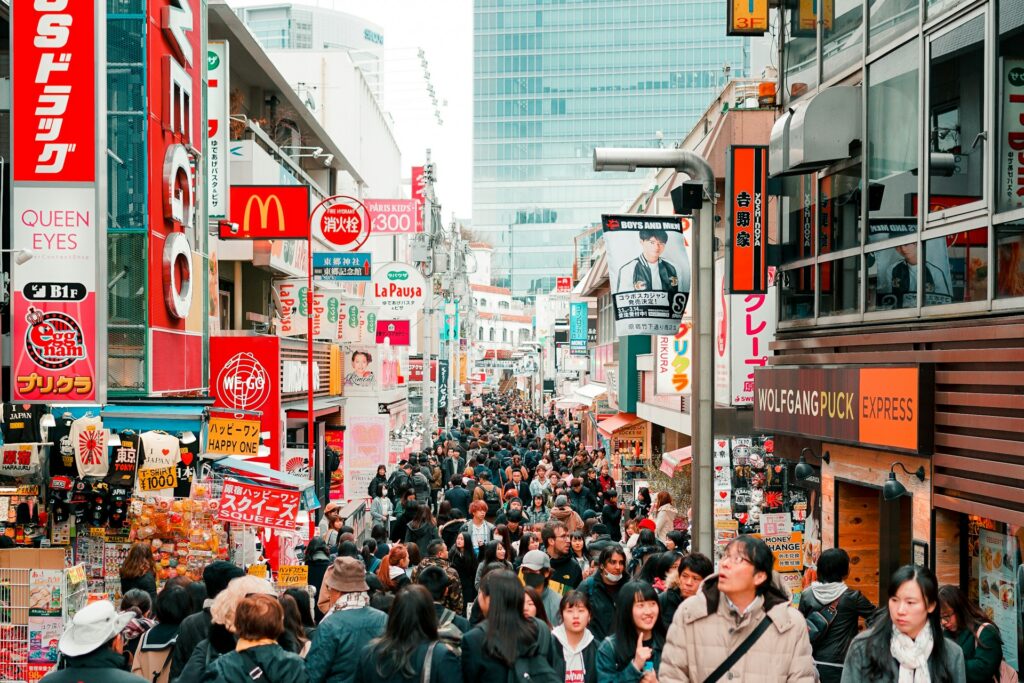
Wedged between Shibuya and Shinjuku, Harajuku is synonymous with Japanese street fashion, quirky shops and colourful youth culture. Most Tokyo neighbourhood guide resources list it as a must‑visit day trip rather than an overnight base.
Why Visit (But Maybe Not Stay In) Harajuku
Harajuku is small and best explored in a few hours. Hotels are limited and often pricey. Instead, stay in nearby Shibuya or Shinjuku and walk or take one JR stop on the Yamanote Line.
That said, being close to Harajuku means easy access to Meiji Shrine, one of Tokyo’s most serene Shinto sites, just steps from the shopping chaos.
What to Do in Harajuku
- Walk Takeshita Street, the narrow pedestrian lane packed with crêpe stands, character cafés and fashion boutiques aimed at teens.
- Visit Meiji Shrine, set in a forested park that feels worlds away from the city despite being in the heart of it.
- Stroll tree‑lined Omotesando, Tokyo’s answer to the Champs‑Élysées, with high‑end fashion, sleek architecture and design‑forward cafés.
- Explore Cat Street, a quieter backstreet between Harajuku and Shibuya filled with independent boutiques and vintage shops.
A complete Tokyo neighbourhood guide pairs Harajuku with Shibuya or Shinjuku as part of a larger west‑side route, rather than treating it as a standalone area.
Ginza: Upscale Shopping and Dining
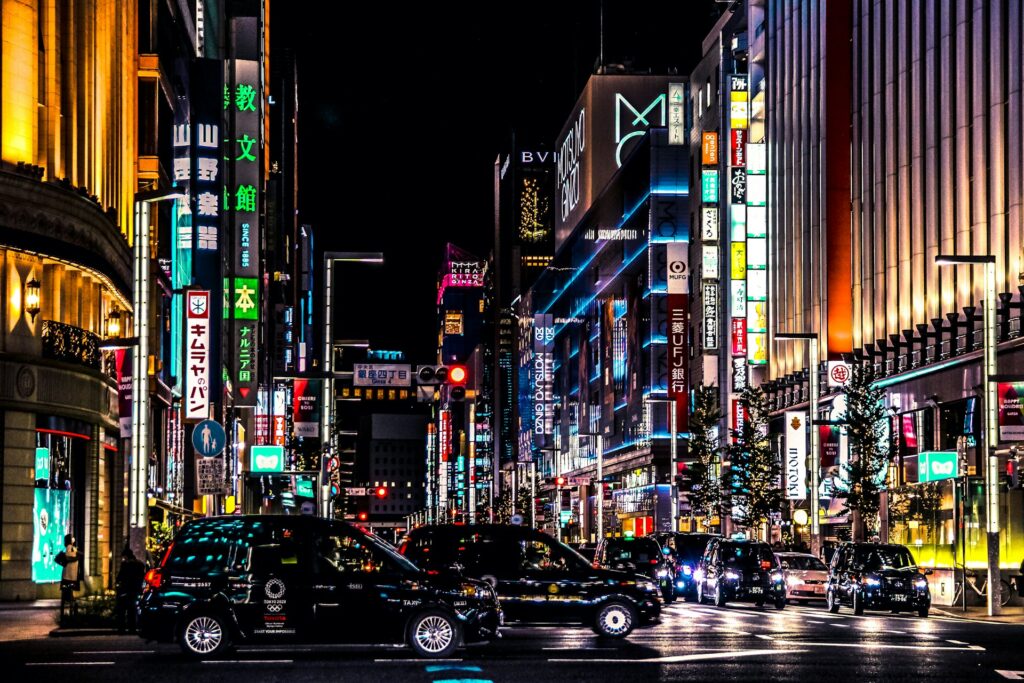
For luxury, elegance and a more refined pace, Ginza is Tokyo’s answer to Fifth Avenue or Bond Street. Any serious Tokyo neighbourhood guide includes this district for travellers interested in high‑end retail, fine dining and theatre.
Why Stay in Ginza
Ginza sits close to Tokyo Station, making it convenient for Shinkansen connections and business districts. Hotels here tend to be upscale, and the neighbourhood quiets down significantly after department stores close, creating a surprisingly peaceful evening atmosphere.
What to Do in Ginza
- Window‑shop (or splurge) along Chuo‑dori, lined with flagship stores from every major luxury brand.
- Explore the basement food halls (depachika) of Mitsukoshi, Matsuya and Ginza Six for gourmet treats and bento boxes.
- Visit the Kabuki‑za Theatre to watch traditional kabuki performances, with English subtitles and single‑act tickets available.
- Dine at Michelin‑starred restaurants, sushi counters and elegant kaiseki establishments.
- Walk pedestrian‑only Chuo‑dori on weekend afternoons when the street closes to cars.
Your Tokyo neighbourhood guide should highlight Ginza if you want proximity to upscale experiences, but note that nightlife here is more subdued than Shibuya or Shinjuku.
Akihabara: Electric Town and Otaku Culture
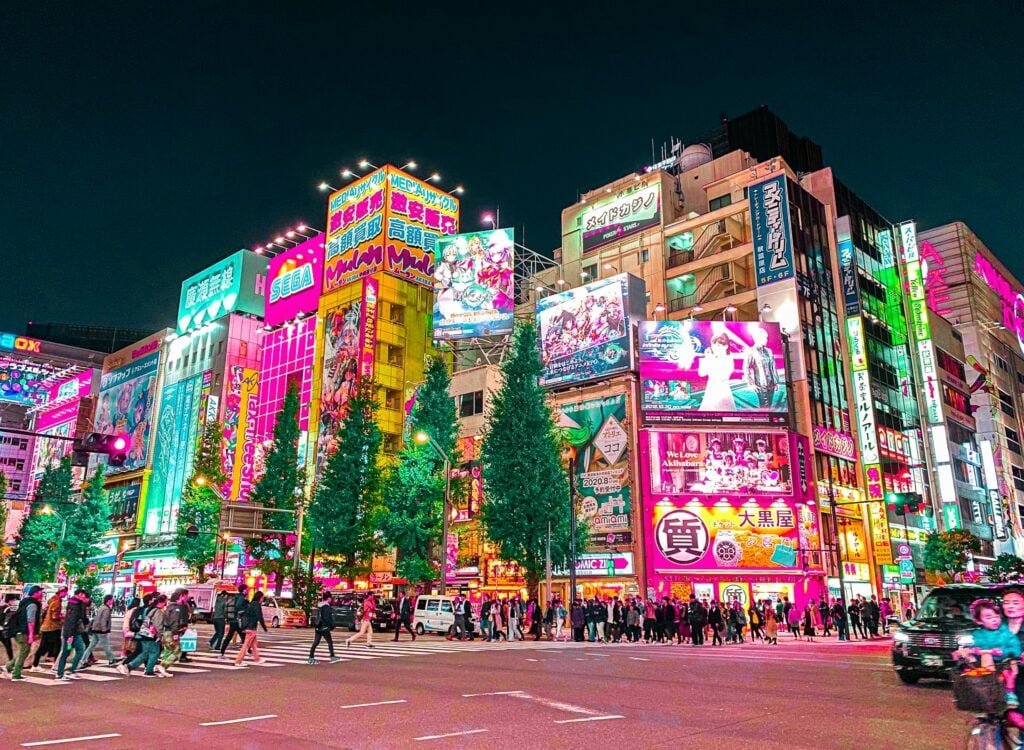
Akihabara, or “Akiba”, is Tokyo’s electronics and anime hub. A niche but important entry in any Tokyo neighbourhood guide, it attracts tech shoppers, gamers and manga fans from around the world.
Why Visit Akihabara
Unless you are a dedicated otaku, Akihabara works best as a half‑day visit rather than a place to base yourself. Hotels exist but are limited, and the area empties out after stores close.
What to Do in Akihabara
- Browse multi‑storey electronics stores for cameras, gadgets, retro game consoles and anime merchandise.
- Visit maid cafés, where servers dressed in frilly costumes perform songs and games for customers.
- Explore Mandarake and other specialty shops for rare manga, figurines and collectibles.
- Check out arcade centres packed with claw machines, rhythm games and vintage cabinets.
Other Notable Tokyo Neighbourhoods
A truly complete Tokyo neighbourhood guide extends beyond the headline districts to include a few more options depending on your interests and trip length.
Ueno: Museums, Parks and Budget Stays
Ueno combines Tokyo’s best museums (National Museum, Science Museum, Western Art Museum), a large park with cherry trees and zoo, plus budget‑friendly hotels and guesthouses. It is practical, accessible and great for families.
Roppongi: Nightlife and Modern Art
Roppongi is known for clubs, international bars and expat‑friendly restaurants, plus the Mori Art Museum and Tokyo Midtown shopping complex. It is loud, late and not for everyone, but nightlife fans will find it essential.
Shimokitazawa: Vintage, Indie and Bohemian
Shimokitazawa is Tokyo’s creative heart – narrow lanes packed with vintage clothing, live music venues, independent theatres and affordable izakayas. It is cheaper, quieter and appeals to travellers looking for a neighbourhood vibe over tourist landmarks.
How to Choose the Right Neighbourhood for Your Tokyo Trip
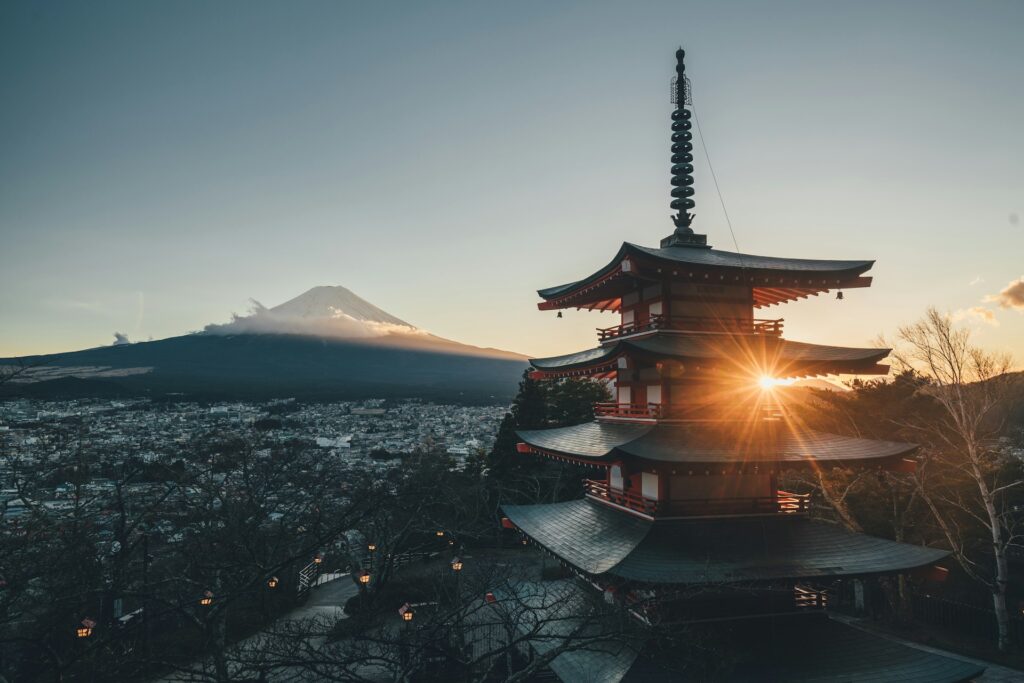
After reading this Tokyo neighbourhood guide, the next question is: which area suits you?
- First‑timers wanting ease: Shinjuku, for unbeatable train connections and everything within reach.
- Nightlife and youth culture: Shibuya, with late bars, clubs and shopping energy.
- Traditional atmosphere: Asakusa, for temples, slower streets and old Tokyo charm.
- Luxury and refinement: Ginza, with high‑end shops, dining and quiet evenings.
- Fashion and trend‑spotting: Harajuku and Omotesando (but stay nearby in Shibuya or Shinjuku).
- Families and museums: Ueno, for parks, zoos and cultural sites.
Many travellers combine neighbourhoods by staying in Shinjuku or Shibuya as a base, then taking day trips to Asakusa, Harajuku, Ginza and Akihabara. This approach, recommended in most practical Tokyo neighborhood guide resources, balances convenience with variety.
Practical Tips for Navigating Tokyo Neighbourhoods
To make the most of your Tokyo neighbourhood guide and get around efficiently:
- Get a Suica or Pasmo card: Rechargeable IC cards work on all trains, subways and buses across Tokyo.
- Download offline maps: Google Maps works well in Tokyo; download areas for offline navigation.
- Stay near a Yamanote Line station: This loop line connects most major neighborhoods and simplifies travel.
- Walk between nearby districts: Shibuya to Harajuku, Harajuku to Omotesando, and Shinjuku to parts of Shibuya are all walkable.
- Avoid rush hour: Trains between 7:30–9:00 and 17:30–19:00 can be uncomfortably packed.
Related Posts