
Bhutan Festivals Explained: Tsechus, Mask Dances & The Best Times to Visit
Bhutan festivals are among the most vibrant and spiritually significant celebrations in the Himalayan kingdom, offering travelers a rare window into centuries‑old Buddhist traditions that remain alive and deeply woven into daily life. Unlike cultural performances staged for tourists, these religious festivals in Bhutan are authentic community gatherings where masked monks perform sacred cham dances to honor Guru Rinpoche and transmit Buddhist teachings through movement, music and ritual.
The most important Bhutan festivals are called Tsechus, meaning “the tenth day” in reference to their timing on the tenth day of a month in the Bhutanese lunar calendar. From the famous Paro Tshechu with its giant thongdrel unfurling at dawn to the capital’s grand Thimphu Tshechu, these Bhutan cultural festivals draw pilgrims and travelers from across the country and around the world.
This comprehensive guide to Bhutan festivals explains what Tsechus are, breaks down the meaning behind mask dances Bhutan, highlights the best Tsechu to attend and provides a practical Bhutan festival calendar to help you plan your visit around these extraordinary celebrations.
What Is a Tsechu? Understanding Bhutan’s Most Important Festivals
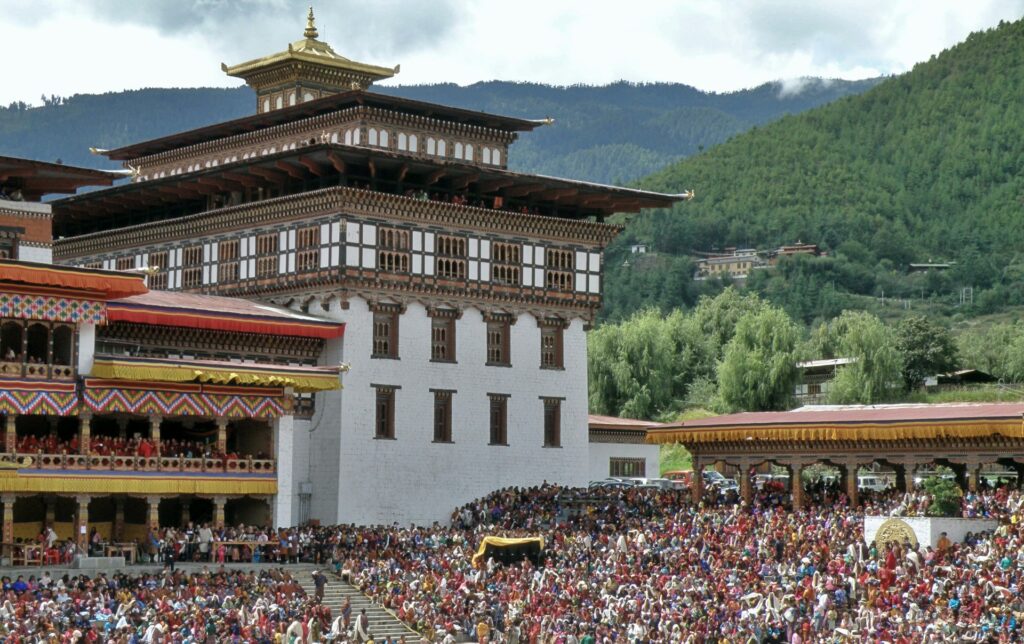
The word “Tsechu” translates to “tenth day,” referring to the tenth day of a month in the Tibetan lunar calendar. Tsechu Bhutan festivals commemorate the life and teachings of Guru Rinpoche (Padmasambhava), the 8th‑century Buddhist master who brought Vajrayana Buddhism to Bhutan and Tibet.
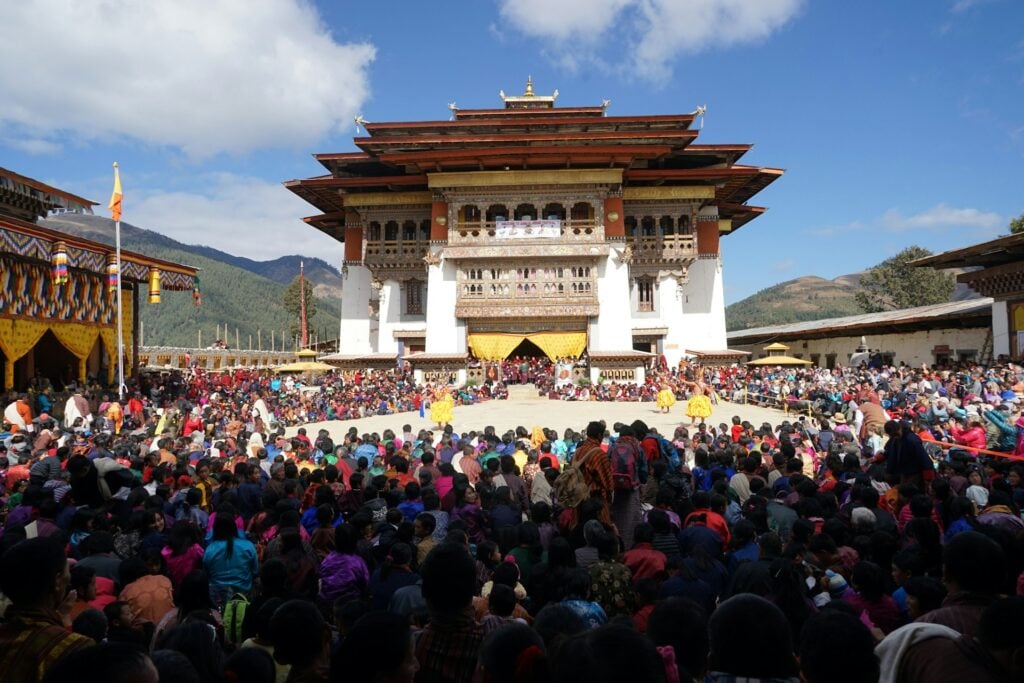
Each district in Bhutan holds its own Tsechu festival annually, typically lasting three to five days. These Bhutan festivals take place in the courtyards of dzongs (fortress‑monasteries) or temples, where masked monks and laymen perform elaborate cham dances that tell stories, purify negative energies and bestow blessings on all who witness them.
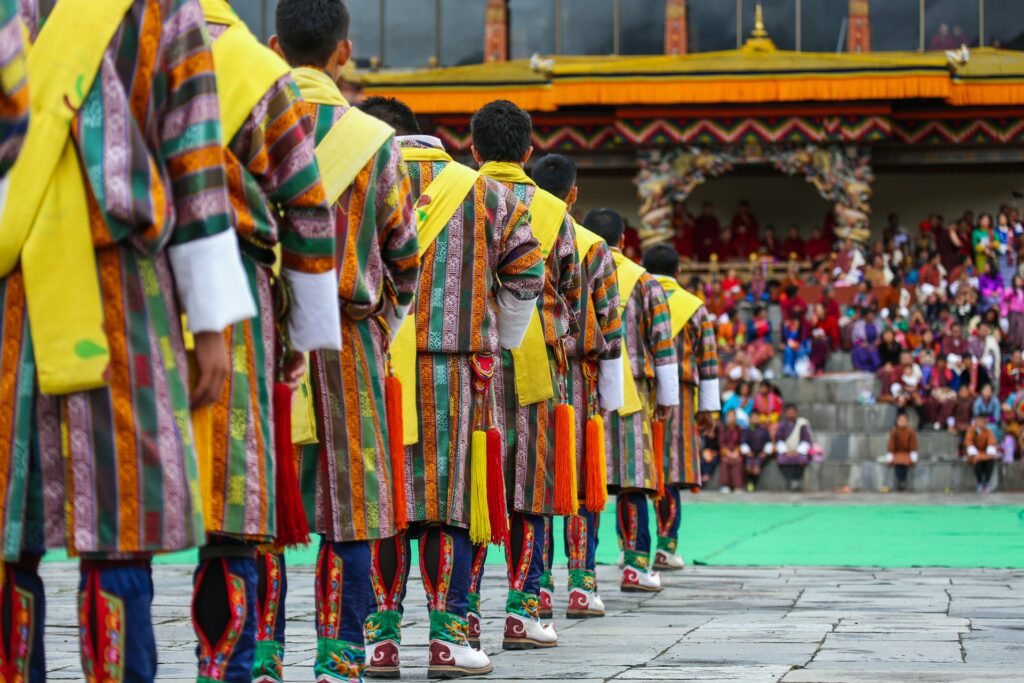
For Bhutanese people, attending a Tsechu is an act of religious devotion. Families travel from remote villages wearing their finest ghos and kiras (traditional dress), bringing food to share, and spending hours watching the dances unfold. The atmosphere combines deep reverence with festive socializing, making Bhutan festivals both sacred ceremonies and joyful community gatherings.
The Sacred Cham Dances: Mask Dances Bhutan Explained
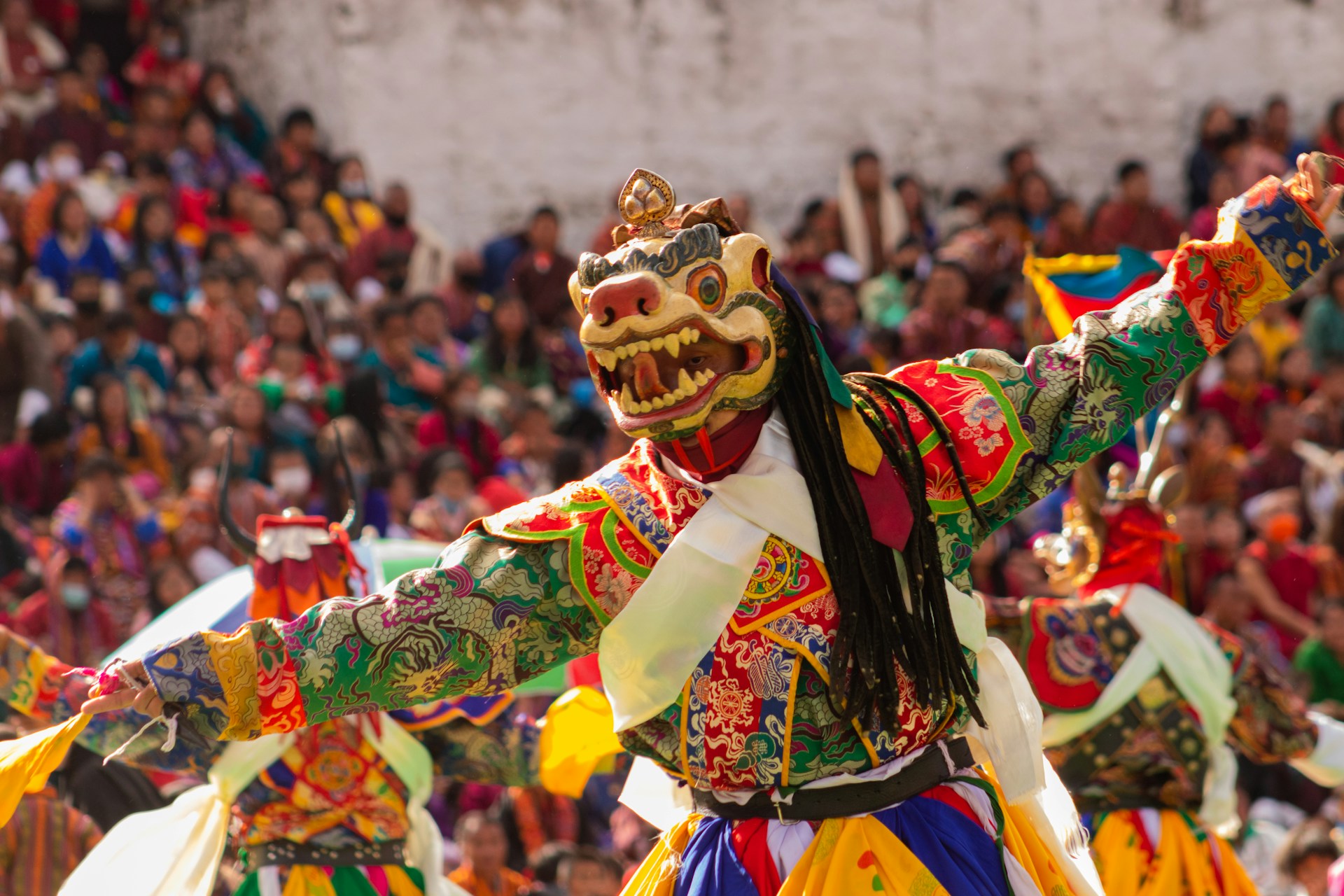
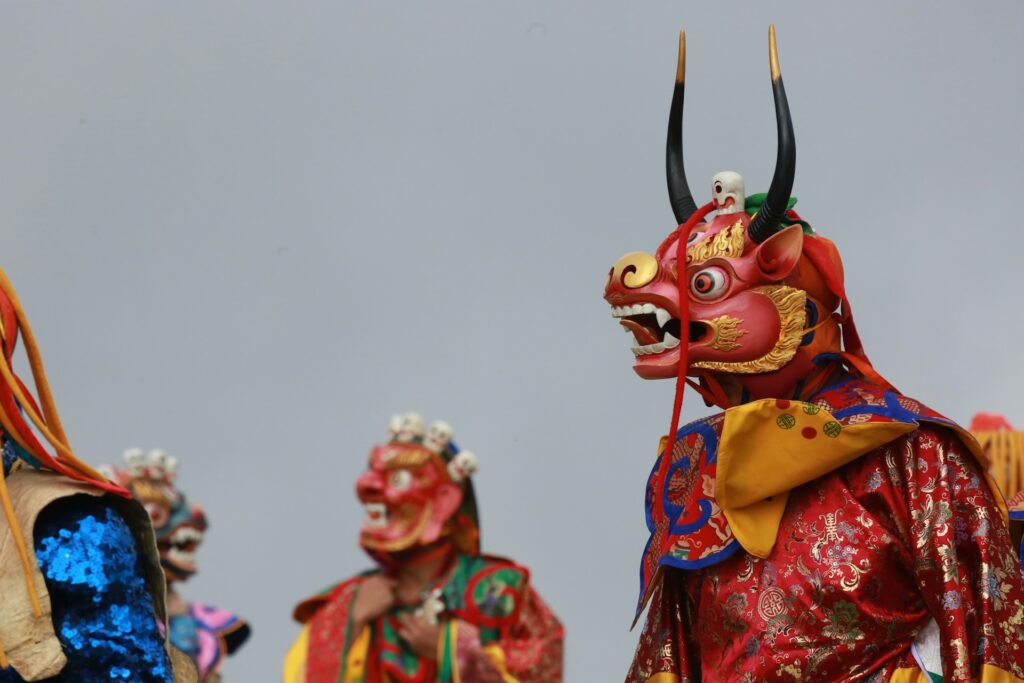
At the heart of every Tsechu are the cham dances—sacred masked performances that are not entertainment but religious rituals with profound spiritual significance. These mask dances Bhutan are performed by trained monks and laymen who spend months preparing for the festival.
Key Elements of Cham Dances
- Masks and costumes: Elaborate masks represent deities, protectors, demons and animals, each carrying specific symbolic meaning. Costumes feature rich brocades, silk robes and ornate jewelry.
- Choreography: Every gesture, step and turn follows strict religious symbolism passed down through generations. Dances can last anywhere from 15 minutes to over an hour.
- Music: Traditional instruments including long horns (dungchen), drums, cymbals and oboes accompany the dancers, creating a hypnotic soundscape.
- Spiritual purpose: Each dance serves to dispel negative forces, impart Buddhist teachings, honor enlightened beings and purify the environment and spectators.
The Black Hat Dance: Icon of Bhutan Festivals
One of the most iconic mask dances Bhutan is the Black Hat Dance (Zhana Ngacham), performed by monks wearing large black hats and flowing robes. This powerful dance reenacts the assassination of the Tibetan king Langdarma, who persecuted Buddhism in the 9th century, by a Buddhist monk disguised as a black hat dancer.
The Black Hat Dance symbolizes the triumph of Buddhism over forces that threaten the dharma. It is considered so sacred that dancers must undergo ritual purification before performing, and spectators believe witnessing it confers spiritual protection.
Other Famous Cham Dances
- Dance of the Terrifying Deities (Tungam): Wrathful manifestations of protective deities drive away evil spirits.
- Dance of the Stags (Sha Cham): Deer masks and antlers tell the story of a hunter converted to Buddhism by Guru Rinpoche.
- Dance of the Drums from Dramitse: A UNESCO Intangible Cultural Heritage performance honoring Guru Rinpoche.
- Dance of the Noblemen and Ladies (Pholay Molay): A lighter, more playful dance providing comic relief between heavier sacred performances.
Major Bhutan Festivals: The Big Three Tsechus
Paro Tshechu: The Most Sacred Festival
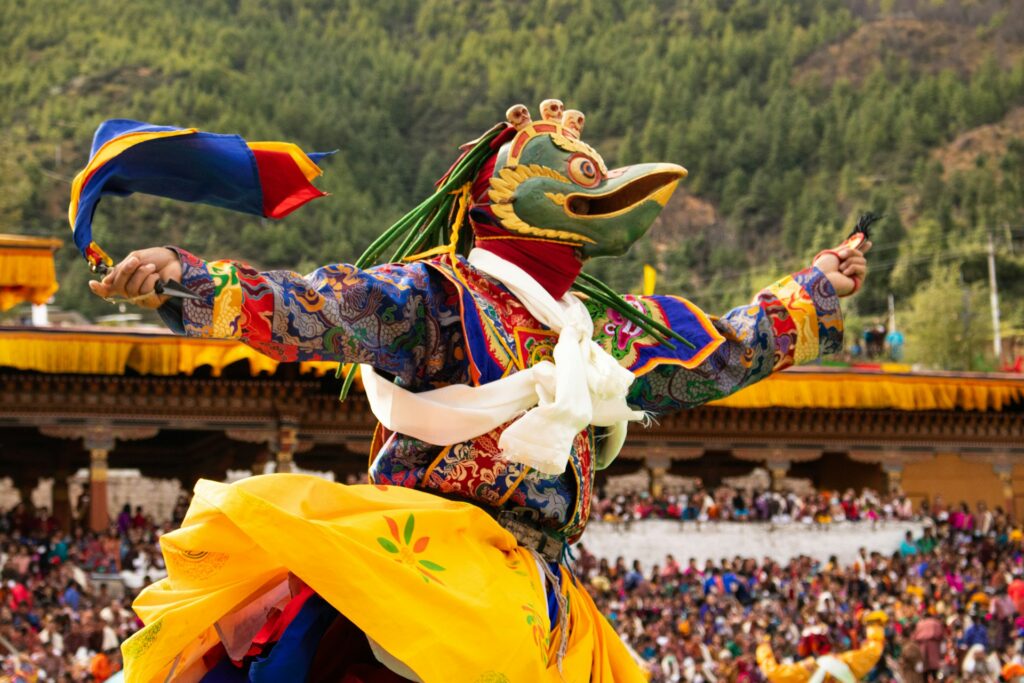
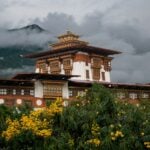
The Paro Tshechu is widely considered the holiest and most spectacular of all Bhutan festivals. Held at Rinpung Dzong in the Paro Valley, this five‑day festival typically takes place in late March or early April.
The highlight of Paro Tshechu is the unfurling of the Guru Thongdrel, a massive religious tapestry depicting Guru Rinpoche and his eight manifestations. This sacred event happens before dawn on the final day, and Bhutanese believe that simply viewing the thongdrel cleanses sins and grants blessings.
Thousands of Bhutanese pilgrims and international visitors attend, making early booking essential. The festival features all the major mask dances Bhutan, including the Black Hat Dance, along with folk performances and traditional atsara (clown) characters who interact with the crowd.
Thimphu Tshechu: The Capital’s Grand Celebration
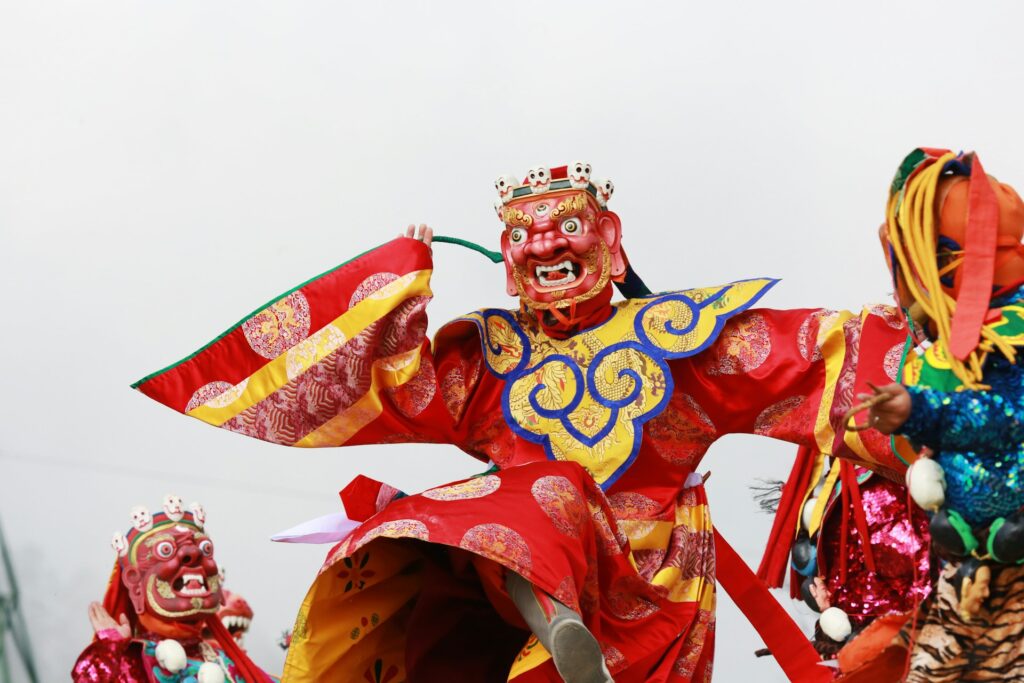
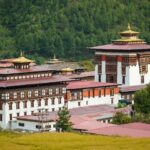
The Thimphu Tshechu is the largest of all Bhutan festivals in terms of attendance, held in the capital city at Tashichho Dzong. This three‑day festival usually occurs in late September or early October.
Thimphu Tshechu showcases the widest variety of cham dances, performed by both monks from the Central Monastic Body and trained laymen. The courtyard of Tashichho Dzong fills with thousands of spectators dressed in traditional attire, creating a sea of color and movement.
Because it takes place in the capital, Thimphu Tshechu is the most accessible festival for travelers, with abundant accommodation, restaurants and logistical ease. It represents the perfect introduction to Bhutan cultural festivals for first‑time visitors.
Punakha Tshechu and Drubchen: Winter Warmth
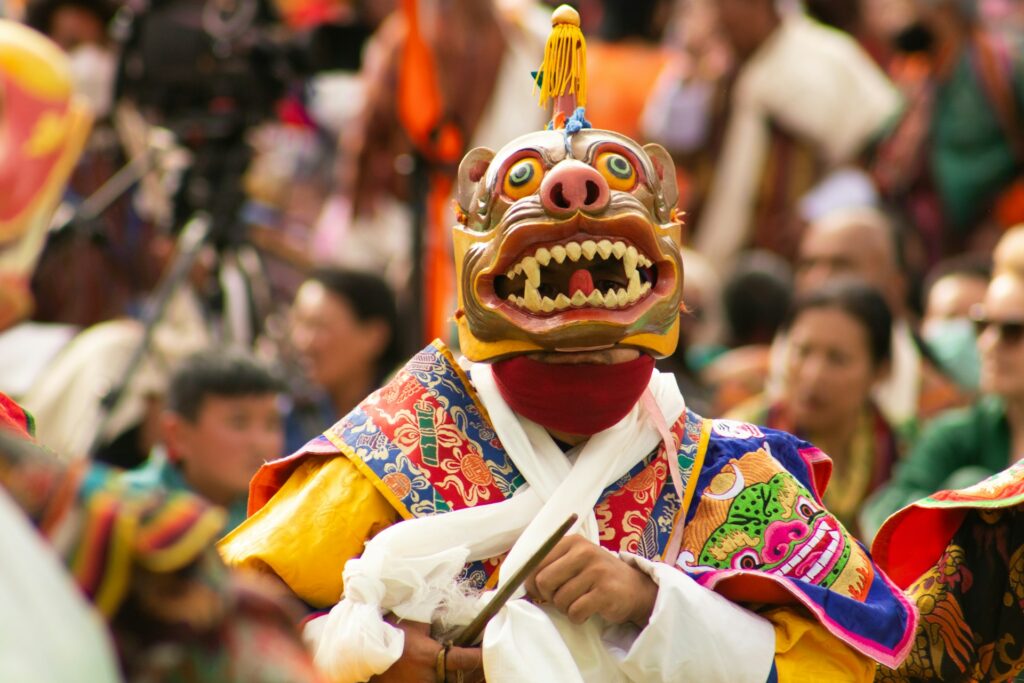
Punakha hosts two connected Bhutan festivals: the Punakha Drubchen (a three‑day ritual reconstructing a 17th‑century battle) followed immediately by the Punakha Tshechu. These festivals take place in late February or early March at Punakha Dzong, one of Bhutan’s most beautiful fortresses.
Punakha’s winter festivals offer warmer weather than Paro’s spring Tsechu, making them popular with travelers who want to avoid higher‑altitude cold. The Drubchen features unique reenactments not seen at other Tsechus, while the Tshechu includes the full range of mask dances Bhutan and concludes with its own thongdrel unfurling.
Complete Bhutan Festival Calendar
Planning your trip around Bhutan festivals requires understanding the lunar calendar, as dates shift slightly each year. Here are key festival dates Bhutan for 2026:
Spring Festivals (February – April)
- Punakha Drubchen & Tshechu: February 24 – March 1
- Chorten Kora Festival: March 3 & March 29
- Talo Tshechu: March 26–28
- Gasa Tshechu: March 26–28
- Paro Tshechu: March 29 – April 2 (most popular)
- Domkhar Tshechu: April 26–28
Autumn Festivals (September – October)
- Haa Summer Festival: September 19–21
- Wangdue Tshechu: September 19–21
- Thimphu Tshechu: September 21–23 (largest attendance)
- Tamshing Tshechu: September 21–23
- Gangtey Tshechu: September 24–26
- Chhukha Tshechu: October 19–21
Winter Festivals (November)
- Black‑Necked Crane Festival: November 11 (celebrating migratory cranes in Phobjikha Valley)
- Jambay Lhakhang Drup: November 24
- Nalakhar Tshechu: November 24–26
Best Time to Visit Bhutan Festivals
The best time to visit Bhutan festivals depends on which Tsechu you want to attend, weather preferences and crowd tolerance.
For First‑Time Visitors: Paro or Thimphu Tshechu
Both Paro Tshechu (late March/early April) and Thimphu Tshechu (late September) are excellent choices for first‑time visitors. They offer the full range of mask dances Bhutan, good weather, well‑developed tourist infrastructure and authentic cultural immersion.
Paro is smaller, more intimate and considered more sacred due to the Guru Thongdrel. Thimphu is larger, more accessible and easier to combine with other sightseeing in the capital.
For Avoiding Crowds: Smaller District Tsechus
If you want the authentic experience of Bhutan festivals without the crowds, consider attending smaller district Tsechus like Talo, Gasa, Wangdue or Gangtey. These festivals feature the same sacred mask dances Bhutan but with fewer tourists and a more local atmosphere.
Weather Considerations
- Spring (March–April): Paro Tshechu season; pleasant days, cool nights, blooming rhododendrons. Can be chilly at higher altitudes.
- Autumn (September–October): Thimphu Tshechu season; clear skies, comfortable temperatures, post‑monsoon freshness. Best overall weather for photography.
- Winter (November–February): Punakha and Bumthang festivals; colder in central and eastern Bhutan but warmer in lower valleys. Fewer tourists, lower hotel rates.
Planning Your Trip Around Bhutan Festivals
Book Well in Advance
Accommodation in Paro, Thimphu and Punakha fills up months ahead during major Bhutan festivals. Book your trip at least 3–6 months in advance, especially for Paro Tshechu, which coincides with peak spring tourist season.
Work with a Licensed Tour Operator
All tourists visiting Bhutan (except Indians, Bangladeshis and Maldivians) must book through a licensed tour operator and pay the daily Sustainable Development Fee. Your operator will handle festival tickets, accommodation and transport, and can position you for the best views of the dances.
Arrive Early for Prime Viewing
The best spots in dzong courtyards fill up fast. Arrive at least an hour before the dances begin to secure a good view. Bring a cushion or mat to sit on, as you will be on stone or wood floors for hours.
Dress Respectfully
While tourists are not required to wear traditional Bhutanese dress, modest clothing is expected. Cover shoulders and knees, remove hats during sacred moments and avoid walking in front of dancers or blocking locals’ views.
Understand the Significance
These are not performances for tourists—they are living religious ceremonies. Be respectful, avoid loud conversations during dances and ask permission before photographing monks or dancers up close.
What to Expect at a Tsechu Festival
Attending one of the major Bhutan festivals is an all‑day (sometimes multi‑day) experience. Here is what a typical day looks like:
- Morning (8:00 AM – 12:00 PM): Dances begin after monks perform opening rituals. Major sacred dances like the Black Hat Dance and Guru Rinpoche manifestations are performed in the morning.
- Midday: Lunch break; families spread picnics in the dzong grounds, vendors sell momos and snacks, and the atmosphere becomes festive and social.
- Afternoon (2:00 PM – 5:00 PM): More mask dances Bhutan, folk performances and comic interludes by atsaras (clowns in colorful masks who bless and tease the crowd).
- Final Day (usually): The thongdrel unfurling happens before dawn, drawing massive crowds. Final dances conclude by late afternoon.
Beyond Tsechus: Other Bhutan Cultural Festivals
While Tsechus dominate the Bhutan festival calendar, other unique celebrations offer different perspectives on Bhutanese culture:
- Black‑Necked Crane Festival (November): Celebrates the arrival of endangered cranes in Phobjikha Valley with folk songs, crane dances and environmental awareness programs.
- Haa Summer Festival (July): Showcases nomadic yak herder culture, traditional sports and local cuisine in the remote Haa Valley.
- Rhododendron Festival (April–May): A newer festival celebrating Bhutan’s national flower with nature walks, exhibitions and cultural programs.
Final Thoughts: The Magic of Bhutan Festivals
Experiencing Bhutan festivals like the Paro Tshechu, Thimphu Tshechu or Punakha Tshechu is one of the most profound cultural experiences available in the Himalayas. These are not staged events but living traditions where ancient Buddhist teachings continue to be transmitted through the mask dances Bhutan, where communities gather in devotion and celebration, and where travelers can witness a way of life that has remained largely unchanged for centuries.
The cham dances, with their swirling robes, haunting music and deep symbolism, create an atmosphere that is simultaneously solemn and joyful, mystical and communal. Whether you are drawn by spiritual curiosity, cultural interest or simply the spectacular visual beauty, attending a Tsechu Bhutan festival will likely be the highlight of your journey to the Land of the Thunder Dragon.
Use this guide and Bhutan festival calendar to plan your visit, choose the best Tsechu to attend based on your travel dates and interests, and prepare to be swept up in one of the world’s most authentic and moving cultural celebrations.