
Ho Chi Minh City Travel Guide: Top Things to Do, Nightlife and Cu Chi Tunnels
Welcome to Ho Chi Minh City, Vietnam’s largest metropolis and economic powerhouse—a dynamic fusion of French colonial elegance, Vietnamese resilience, and modern Southeast Asian ambition. Still affectionately called Saigon by locals and travelers alike, this vibrant city of 9 million residents pulses with motorbike traffic, street food aromas, historic landmarks, and an entrepreneurial spirit unmatched anywhere in Vietnam. This comprehensive travel guide covers the best things to do in Saigon, from exploring war history at the Cu Chi Tunnels to experiencing the electric Ho Chi Minh City nightlife that transforms streets into open-air celebrations every evening.
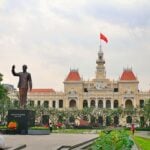
When you visit Ho Chi Minh City Vietnam, you encounter a destination that seamlessly blends painful history with optimistic future-building. French colonial architecture—Notre-Dame Cathedral Basilica, Central Post Office, Opera House—stands proudly alongside gleaming skyscrapers in District 1’s financial center. War remnants museums provide sobering historical context, while rooftop bars offer champagne-fueled skyline views. Street food vendors serving pho and banh mi operate beside high-end fusion restaurants. This contrast defines the things to do in Ho Chi Minh experience—a city that honors its past while racing toward its future.
Whether you’re seeking historical immersion through Cu Chi Tunnels exploration, culinary adventures sampling authentic Vietnamese cuisine, shopping at Ben Thanh Market, or discovering the vibrant Ho Chi Minh City nightlife along Bui Vien Walking Street, this guide provides comprehensive coverage of essential experiences, practical tips, and insider recommendations to maximize your Saigon adventure.
Understanding Ho Chi Minh City: Essential Context
Before diving into things to do in Saigon Vietnam, understanding the city’s history and layout enriches your experience. Ho Chi Minh City was renamed from Saigon in 1976 following Vietnam’s reunification after the war, honoring revolutionary leader Ho Chi Minh. However, locals still predominantly use “Saigon” in daily conversation, and both names remain widely accepted.
The city divides into 24 districts, with District 1 serving as the central tourist hub containing most colonial landmarks, hotels, restaurants, and entertainment venues. District 3 offers more residential character with local markets and authentic eateries. Districts 2 and 7 represent modern development with international schools, expat communities, and contemporary shopping malls. Understanding this layout helps you navigate the things to do in Ho Chi Minh landscape efficiently.
Best Time to Visit Ho Chi Minh City
Planning your Ho Chi Minh City visit requires understanding the tropical climate’s two distinct seasons. The dry season (December-April) offers optimal conditions with temperatures 25-35°C (77-95°F), minimal rainfall, and abundant sunshine—perfect for outdoor things to do in Saigon like walking tours and market exploration. However, this peak season brings higher accommodation prices and larger tourist crowds, particularly during Tet (Vietnamese New Year, late January/February) when the city transforms with decorations but many businesses close.
The rainy season (May-November) features daily afternoon thunderstorms typically lasting 1-2 hours, with temperatures remaining consistently warm (26-32°C/79-90°F). While rain disrupts some outdoor activities, this period offers 30-40% lower accommodation rates, fewer tourists, and lush green landscapes. The rain rarely ruins entire days, making rainy season visits perfectly viable for budget-conscious travelers exploring Ho Chi Minh City Vietnam. Most things to do in Ho Chi Minh including museums, indoor markets, restaurants, and nightlife remain unaffected by weather.
Top Things to Do in Ho Chi Minh City: Essential Attractions
1. War Remnants Museum – Understanding Vietnam’s History
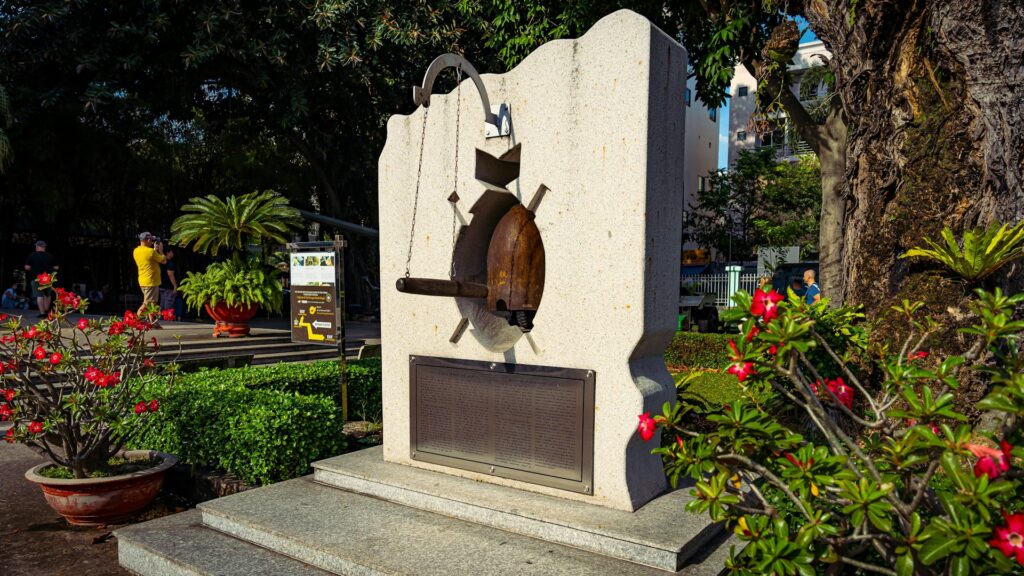
The War Remnants Museum ranks among the most important things to do in Saigon for understanding Vietnam’s 20th-century conflicts. This powerful museum documents the Vietnam War (called the American War locally) through photographs, military equipment, weapons, and firsthand accounts. Outdoor exhibits display American aircraft, tanks, and helicopters, while indoor galleries feature disturbing yet essential documentation of Agent Orange effects, wartime atrocities, and the conflict’s devastating humanitarian impact.
The museum presents overtly anti-American perspectives that can feel one-sided to Western visitors, yet it provides crucial Vietnamese viewpoints rarely encountered in Western education. Allocate 2-3 hours for thorough exploration. The emotional weight demands respectful behavior—this isn’t entertainment but essential historical education. Admission: 40,000 VND (approximately $1.60). Location: 28 Vo Van Tan, District 3. Open daily 7:30 AM-6:00 PM.
2. Notre-Dame Cathedral Basilica of Saigon
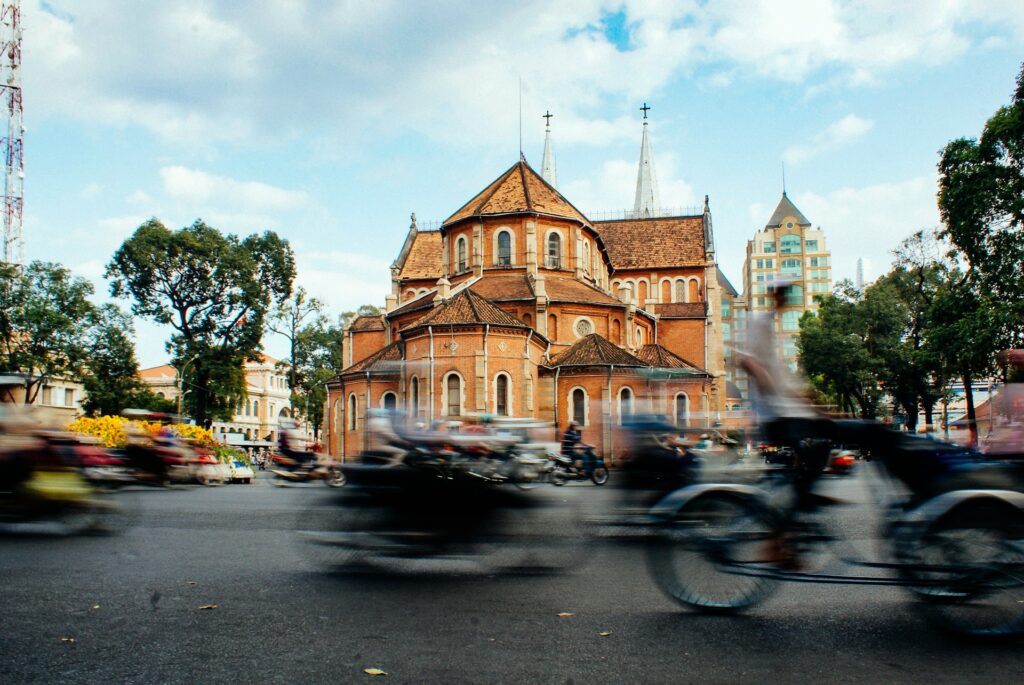
This iconic French colonial cathedral represents one of the most photographed things to do in Ho Chi Minh. Built between 1863-1880 using materials imported entirely from France, including distinctive red bricks that never fade, the Neo-Romanesque cathedral features twin bell towers reaching 58 meters high, elegant stained glass windows, and peaceful interior spaces offering respite from Saigon’s chaos.
Unfortunately, the cathedral remains closed for extensive renovations through 2027, with scaffolding obscuring exterior views. However, the adjacent square and surrounding colonial architecture still merit visits. The neighboring Saigon Central Post Office (designed by Gustave Eiffel) remains open and provides excellent photo opportunities showcasing French colonial architecture that defines historic Ho Chi Minh City.
3. Ben Thanh Market – Shopping and Street Food Hub
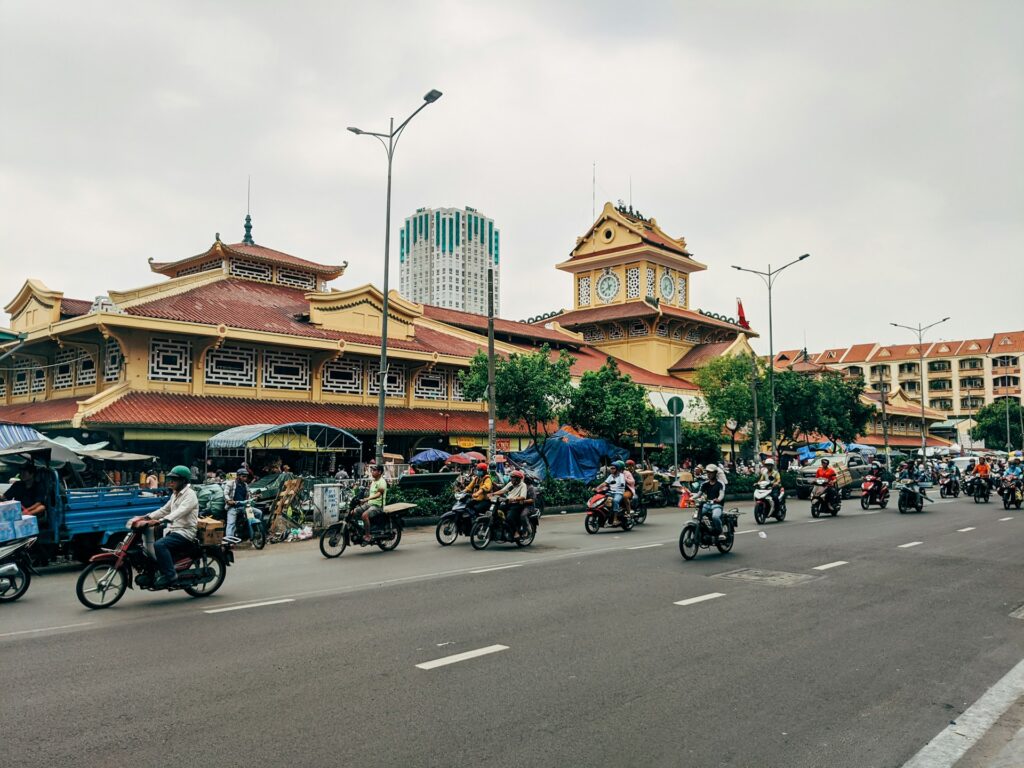
Ben Thanh Market stands as Saigon’s most famous marketplace and essential inclusion on any things to do in Saigon Vietnam itinerary. This massive covered market houses hundreds of stalls selling clothing, souvenirs, handicrafts, coffee, spices, and local specialties. The central food court offers authentic Vietnamese dishes at tourist-friendly prices (though higher than street vendors). Expect aggressive vendor tactics—bargaining skills essential, aim for 40-50% of initial quoted prices.
The market transforms after dark when street food vendors surround the exterior perimeter, creating one of Ho Chi Minh City’s best culinary experiences. Evening food stalls (approximately 6 PM-midnight) serve grilled seafood, Vietnamese pancakes (banh xeo), noodle soups, and fresh fruit at authentic local prices. The night market atmosphere—plastic stools, bustling crowds, sizzling woks—epitomizes Saigon street food culture. Location: Le Loi Boulevard, District 1. Indoor market open daily 6 AM-6 PM.
4. Independence Palace (Reunification Palace)
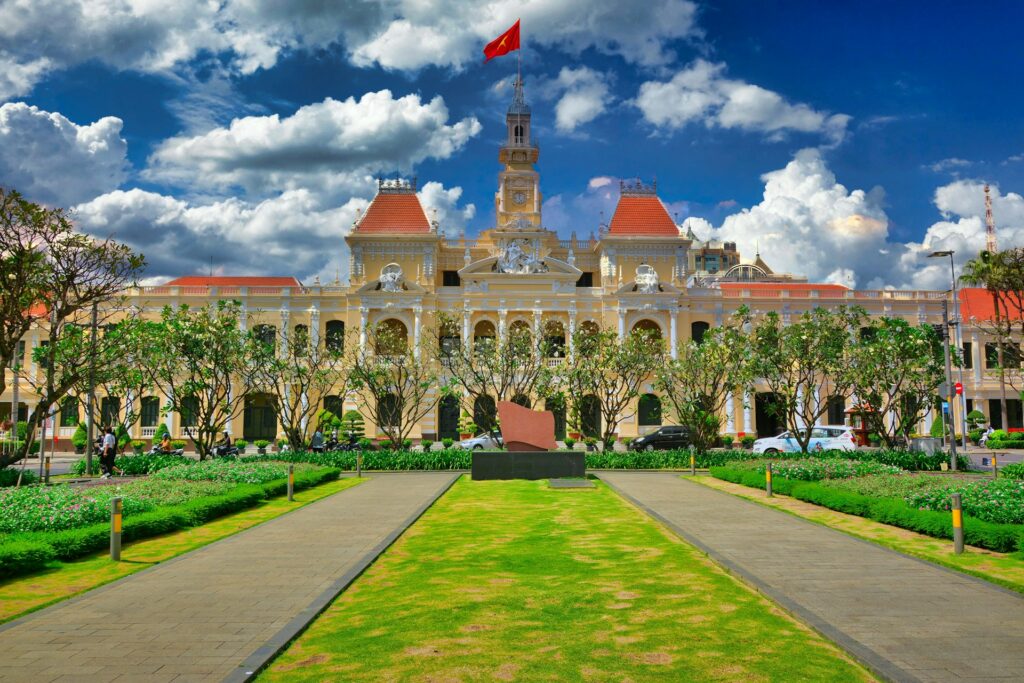
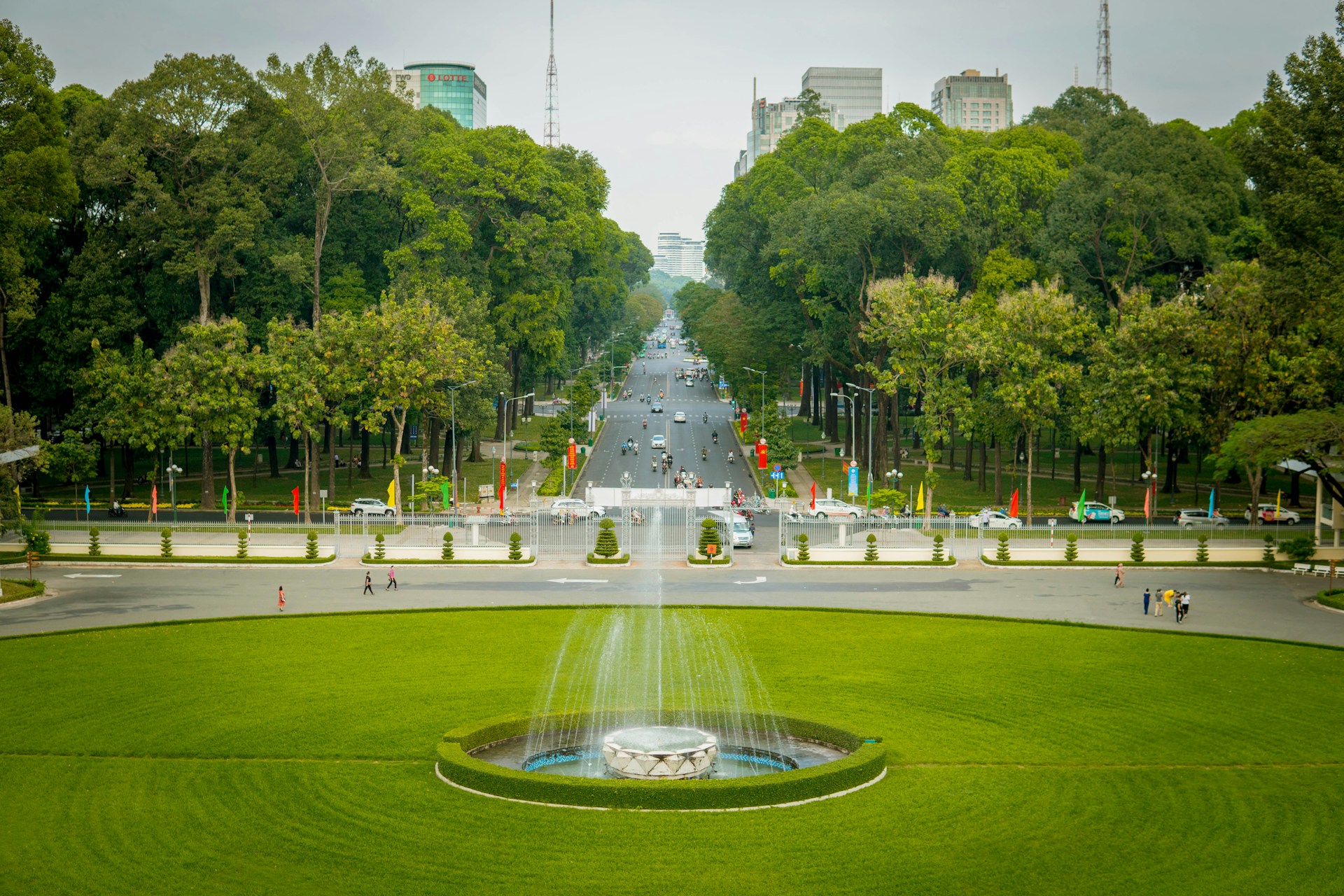
The Independence Palace provides fascinating historical insights into Vietnam’s government and the war’s dramatic conclusion. This modernist building served as South Vietnam’s presidential palace until April 30, 1975, when North Vietnamese tanks crashed through its gates, symbolically ending the war and reunifying Vietnam. The palace preserves 1960s-1970s interiors including presidential offices, war command rooms, rooftop helicopter pads, and underground tunnels with telecommunications equipment.
Self-guided audio tours (included with admission) explain each room’s historical significance. The preserved time-capsule aesthetic—vintage furniture, period décor, Cold War-era technology—offers unique glimpses into Vietnam’s recent history. Admission: 40,000 VND. Location: 135 Nam Ky Khoi Nghia, District 1. Open daily 7:30 AM-11:00 AM and 1:00 PM-4:00 PM.
5. Saigon Skydeck at Bitexco Financial Tower
For panoramic Ho Chi Minh City views, the Saigon Skydeck observation deck on the 49th floor (178 meters) of Bitexco Financial Tower offers 360-degree vistas across the sprawling metropolis. Interactive touchscreens provide historical information and landmark identification. The distinctive building—designed resembling a lotus flower—dominates Saigon’s skyline. Visit during golden hour (5-6 PM) for optimal lighting transitioning from daylight to illuminated evening cityscape. Admission: 200,000 VND. Location: 36 Ho Tung Mau, District 1. Open daily 9:30 AM-9:30 PM.
6. Jade Emperor Pagoda (Phuoc An Hoi Quan Pagoda)
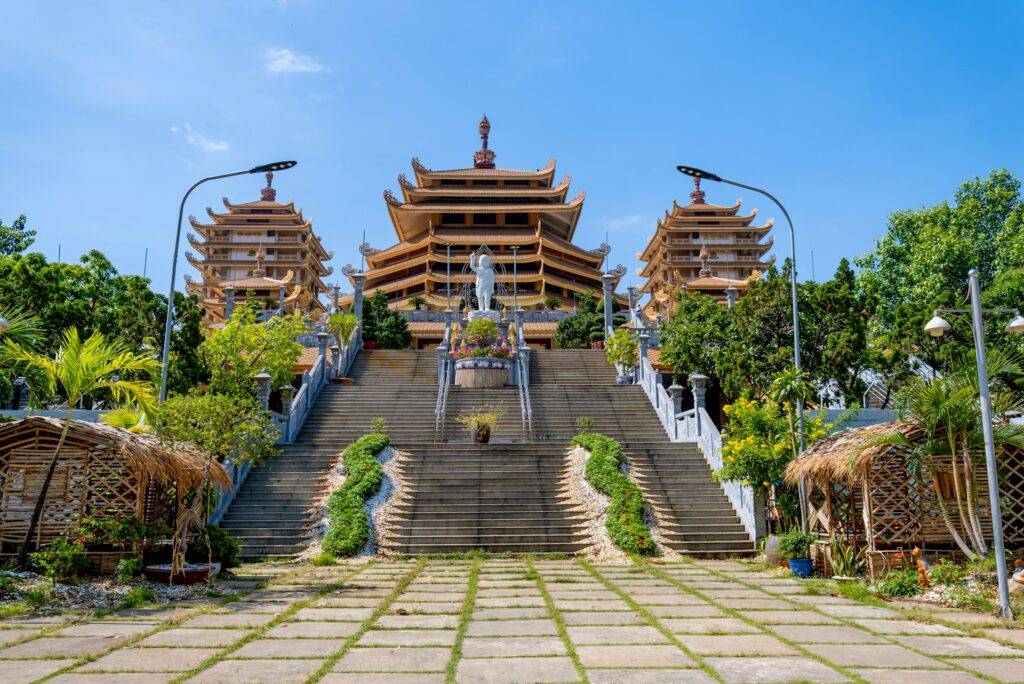
This ornate Taoist pagoda built in 1909 represents one of Saigon’s most atmospheric spiritual sites and frequently overlooked inclusion on things to do in Saigon lists. Intricate wood carvings, ceramic-encrusted roofs, incense smoke filling prayer halls, and fascinating statues depicting Taoist and Buddhist deities create mystical ambiance. The temple remains actively used by local worshippers, providing authentic spiritual experiences rather than tourist attractions.
Key features include the main sanctuary’s Jade Emperor statue, the Hall of Ten Hells depicting Buddhist afterlife punishments, and peaceful courtyard turtle ponds. Respectful behavior essential—dress modestly (shoulders and knees covered), remove shoes before entering buildings, and ask permission before photographing worshippers. Free admission, donations appreciated. Location: 73 Mai Thi Luu, District 3.
Cu Chi Tunnels: Essential Day Trip from Ho Chi Minh City
No Ho Chi Minh City visit feels complete without exploring the famous Cu Chi Tunnels—an extraordinary underground network stretching over 250 kilometers that served as crucial Viet Cong stronghold during the Vietnam War. Located approximately 70 kilometers northwest of Saigon (1.5-2 hours drive), these tunnels provided hiding spots, living quarters, supply routes, hospitals, and strategic bases enabling guerrilla warfare against superior American military forces.
What to Expect at Cu Chi Tunnels
Two main Cu Chi Tunnels sites welcome tourists—Ben Dinh (smaller, more touristy, closer to city) and Ben Duoc (larger, more authentic, further from city). Both locations offer similar experiences including:
- Tunnel Crawling: Widened sections allow visitors to experience underground passages (original tunnels measured only 80cm x 60cm). The claustrophobic experience—dark, hot, cramped—provides sobering appreciation for Viet Cong soldiers’ endurance. Tourists typically crawl 20-100 meters depending on comfort levels, with multiple exit points.
- Trap Demonstrations: Guides demonstrate various booby traps used against American soldiers—punji stake pits, swinging mace traps, and other brutal devices that proved devastatingly effective.
- War Remnants: Displays of destroyed American tanks, artillery, unexploded ordnance, and military equipment captured during the war.
- Underground Facilities: Reconstructed living quarters, meeting rooms, weapons factories, and field hospitals showing how entire communities survived underground for years.
- Shooting Range: Optional rifle and machine gun shooting using authentic war-era weapons (additional cost, approximately $1-2 per bullet).
Visiting Cu Chi Tunnels: Practical Information
Tour Options: Most visitors book half-day guided tours from Ho Chi Minh City including round-trip transportation, English-speaking guide, and entrance fees (approximately $10-25 per person depending on group size and inclusions). Tours typically depart 7:30-8:00 AM or 12:30-1:00 PM, lasting 5-6 hours total. Independent visits possible via public bus or private taxi, though guides significantly enhance historical understanding.
What to Bring: Comfortable closed-toe shoes (tunnels can be muddy), light long pants and shirts (despite heat, protects in tunnels), insect repellent (mosquitoes prevalent), water, and small flashlight. Avoid wearing shorts or tank tops—both impractical for tunnel crawling and disrespectful at war memorial sites.
Cost: Entrance fees 110,000 VND ($4.50) at Ben Dinh, 90,000 VND ($3.70) at Ben Duoc. Shooting range 700,000-1,000,000 VND ($29-41) for 10-bullet packages.
Ho Chi Minh City Nightlife: Where to Experience Saigon After Dark
The vibrant Ho Chi Minh City nightlife transforms streets into energetic celebrations featuring rooftop bars, nightclubs, live music venues, and street-side bia hoi (fresh beer) establishments. Saigon’s nightlife caters to all preferences—sophisticated cocktail lounges, budget-friendly backpacker bars, Vietnamese beer gardens, and pulsing dance clubs.
Bui Vien Walking Street – Backpacker Hub
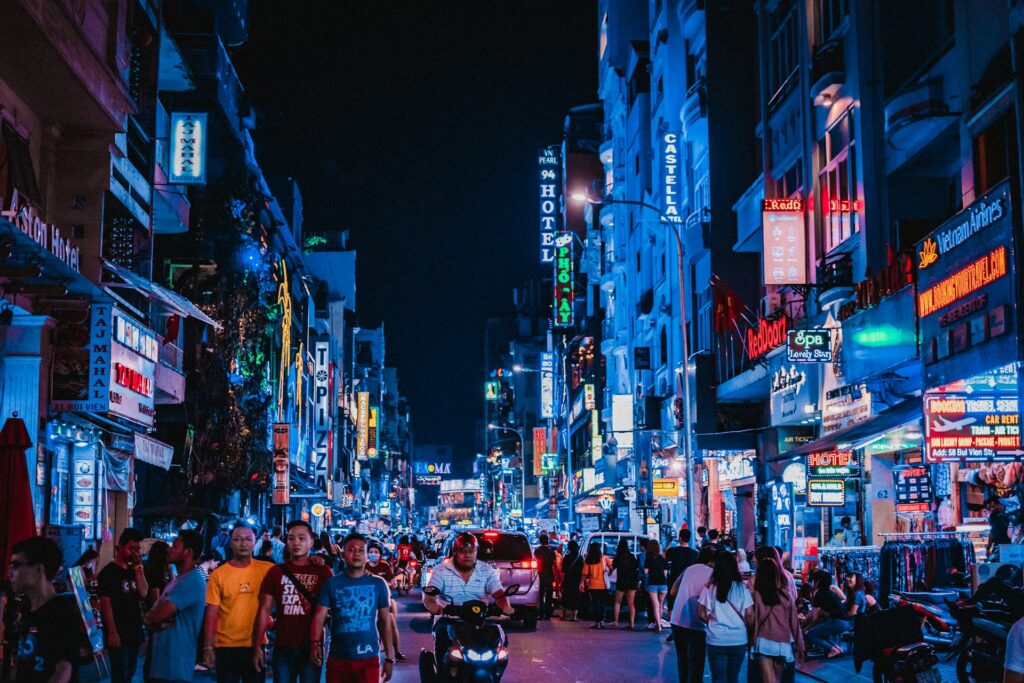
Bui Vien Street represents the epicenter of budget-friendly Ho Chi Minh City nightlife. This pedestrian-only street (approximately 6 PM-2 AM) buzzes with bars blasting music, street vendors selling food and drinks, massage touts, and international backpackers creating party atmosphere. Cheap beer (15,000-25,000 VND/$0.60-1 for draft beer), rowdy crowds, and anything-goes vibe characterize Bui Vien. While lacking sophistication, the street offers authentic Saigon backpacker experiences and opportunities meeting fellow travelers. Notable bars include Pasteur Street Brewing Company, The Owl, and Crazy Buffalo.
Rooftop Bars – Skyline Views
Upscale Ho Chi Minh City nightlife gravitates toward spectacular rooftop bars offering panoramic city views alongside premium cocktails:
- Saigon Saigon Rooftop Bar (Caravelle Hotel): Historic 9th-floor bar where war correspondents gathered during the 1960s-70s. Sophisticated atmosphere, classic cocktails, live jazz, and sweeping city views. Cocktails 200,000-300,000 VND ($8-12).
- Chill Skybar (AB Tower): 26th-floor bar with infinity pool, panoramic 360-degree views, and trendy crowd. Sunset timing optimal. Cocktails 150,000-250,000 VND ($6-10).
- EON Heli Bar (Bitexco Tower): 52nd-floor helipad-turned-bar offering the highest rooftop experience in Ho Chi Minh City. Premium pricing but unmatched views. Cocktails 300,000-500,000 VND ($12-20).
Live Music and Nightclubs
For dancing and DJ sets, Saigon’s club scene concentrates around District 1 and emerging District 2:
- Lush Nightclub: High-energy dance club featuring international and local DJs, impressive sound system, and stylish crowd. Cover charges vary (100,000-300,000 VND/$4-12) depending on events.
- Acoustic Bar: Live acoustic performances in intimate setting attracting local Vietnamese musicians and music lovers. No cover charge, reasonably priced drinks.
- Layla Nightclub: Upscale club with dress code, quality cocktails, and sophisticated clientele. Popular with affluent locals and expats.
Bia Hoi Culture – Local Beer Gardens
For authentic local Ho Chi Minh City nightlife experiences, join Vietnamese crowds at bia hoi establishments—open-air beer gardens serving fresh draft beer (bia tuoi) for incredibly cheap prices (5,000-10,000 VND/$0.20-0.40 per glass). Patrons sit on small plastic stools at sidewalk tables eating grilled meats, seafood, and Vietnamese snacks while socializing. Bia hoi offers genuine cultural immersion unavailable in tourist bars.
Where to Stay in Ho Chi Minh City
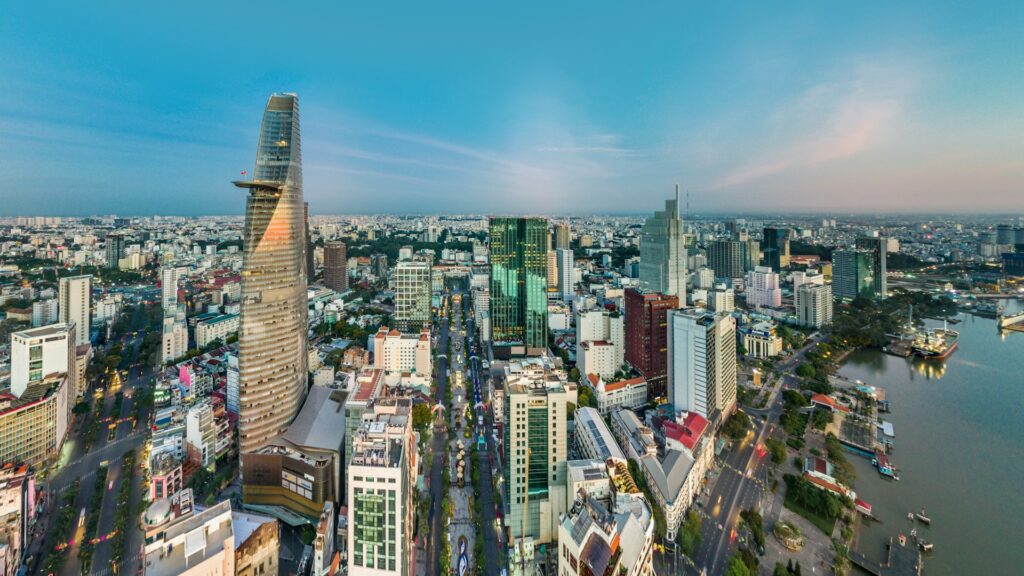
District 1 (Downtown): Optimal for first-time visitors seeking proximity to major things to do in Ho Chi Minh. Walking distance to Ben Thanh Market, Notre-Dame Cathedral, Reunification Palace, restaurants, and nightlife. Accommodation ranges from budget hostels ($8-15/night) to mid-range hotels ($40-80) to luxury properties ($150-300+).
Pham Ngu Lao/Bui Vien Area: Backpacker central with cheapest accommodation ($5-20/night), vibrant nightlife, travel agencies, and international restaurants. Can be noisy—request rooms away from Bui Vien Street if preferring sleep over parties.
District 3: More residential and authentic than District 1, offering mid-range hotels and local dining at lower prices. Still walkable or short taxi to major attractions.
District 2 (Thao Dien): Expat neighborhood with international restaurants, cafes, and contemporary shopping. Further from historical things to do in Saigon Vietnam but offers modern amenities and riverside atmosphere.
Ho Chi Minh City Food Scene: What to Eat
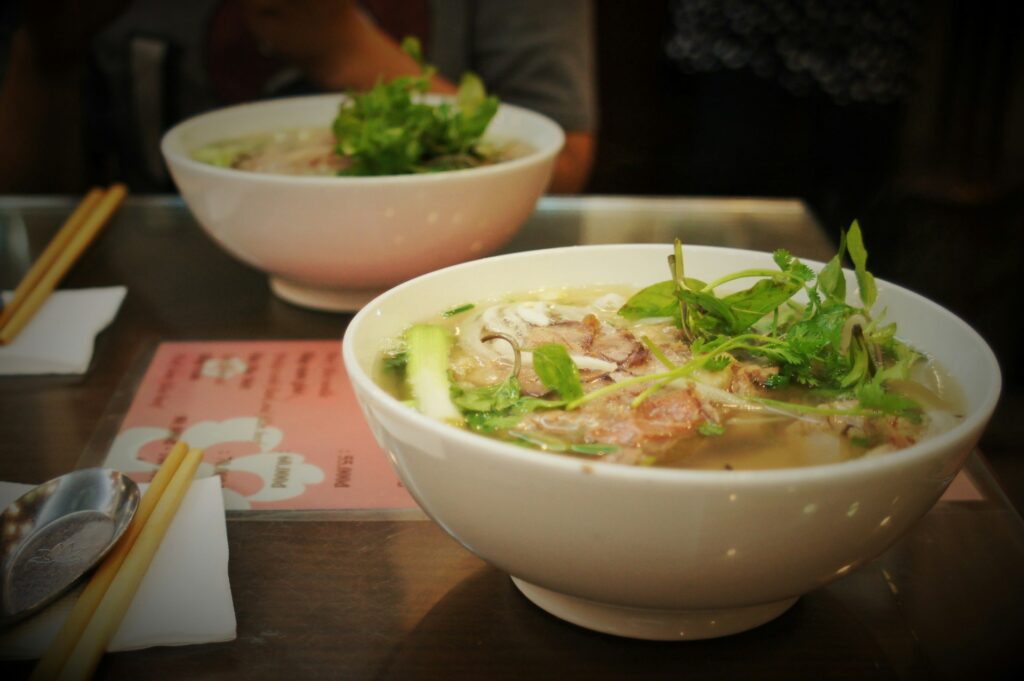
Saigon’s culinary landscape rivals any Asian city, offering everything from humble street food stalls to refined Vietnamese fusion restaurants. Essential dishes to try during your Ho Chi Minh City visit:
- Pho: Vietnam’s iconic rice noodle soup with beef (pho bo) or chicken (pho ga). Morning specialty served at dedicated pho restaurants. Cost: 30,000-60,000 VND ($1.20-2.50).
- Banh Mi: French-influenced baguette sandwich filled with pate, Vietnamese cold cuts, pickled vegetables, cilantro, and chili. Street vendors sell excellent versions for 15,000-30,000 VND ($0.60-1.20).
- Banh Xeo: Crispy Vietnamese pancake filled with pork, shrimp, bean sprouts, and herbs, eaten by wrapping in lettuce and rice paper.
- Bun Cha: Grilled pork served with rice vermicelli, fresh herbs, and dipping sauce. Hanoi specialty now widely available in Saigon.
- Ca Phe Sua Da: Vietnamese iced coffee with condensed milk—intensely strong, incredibly sweet, absolutely addictive.
Practical Information for Ho Chi Minh City
Visa Requirements
Most nationalities can enter Vietnam visa-free for 15-45 days depending on passport (check current regulations). E-visas available for 90-day stays costing $25 with 3-day processing. Visa on arrival still available at airports. Ensure passport validity exceeds 6 months beyond intended departure.
Money and Currency
Vietnamese Dong (VND) is official currency with approximate exchange rates 24,000-25,000 VND per US dollar. ATMs widespread in Ho Chi Minh City accepting international cards (withdrawal limits typically 2,000,000-5,000,000 VND/$80-200 per transaction with fees). Many establishments accept US dollars but provide poor exchange rates—use local currency. Mobile payments (Momo, ZaloPay) popular but require Vietnamese bank accounts or phone numbers.
Transportation
Grab (Southeast Asian Uber) dominates ride-hailing with transparent pricing and English-language app. Motorbike taxis (xe om) offer cheapest transport but require negotiation. Traditional taxis reliable if using reputable companies (Vinasun, Mai Linh). Traffic chaotic—crossing streets requires confidence and steady pace (don’t hesitate mid-crossing). Renting motorbikes possible but dangerous for inexperienced riders given aggressive traffic.
Safety
Ho Chi Minh City remains generally safe with low violent crime rates. Petty theft (phone/bag snatching from motorbikes) occurs frequently—maintain awareness, secure belongings, avoid displaying expensive electronics conspicuously. Scams target tourists (overpriced taxis, fake tour operators, restaurant bill padding)—use Grab, book tours through reputable agencies, check bills carefully.
Conclusion: Your Ho Chi Minh City Adventure Awaits
This comprehensive guide equips you for successful Ho Chi Minh City exploration—from understanding optimal visiting seasons to experiencing essential things to do in Saigon, from crawling through historic Cu Chi Tunnels to enjoying electric Ho Chi Minh City nightlife. Saigon rewards travelers with extraordinary contrasts: painful war history alongside optimistic development, French colonial elegance amid chaotic modernity, sophisticated rooftop bars above street-level pho stalls.
Whether you’re drawn to historical exploration, culinary adventures, cultural immersion, or vibrant nightlife, Ho Chi Minh City Vietnam delivers unforgettable experiences at every corner. The things to do in Saigon Vietnam extend far beyond this guide—endless street food discoveries, hidden cafes, local markets, and unexpected encounters create personalized adventures unique to each traveler.
Begin planning your Ho Chi Minh City journey today. Vietnam’s largest metropolis awaits with open arms, delicious cuisine, fascinating history, and genuine hospitality ready to exceed expectations and create lasting Southeast Asian memories.
Related Posts