
UNESCO World Heritage Sites in Nepal: A Complete Cultural Guide
Nepal, the mountainous Himalayan nation wedged between India and China, harbors an extraordinary concentration of cultural and natural wonders recognized by UNESCO. The UNESCO sites Nepal portfolio comprises four designated World Heritage Sites that collectively contain ten distinct locations—a remarkable density for a country of Nepal’s modest geographic size. These world heritage sites in Nepal showcase the nation’s position as a crossroads of Hindu and Buddhist civilizations, where ancient traditions, artistic excellence, and spiritual devotion converge to create one of the world’s most culturally rich destinations.
The crown jewel of UNESCO sites Nepal is the Kathmandu Valley, a single World Heritage designation that encompasses seven separate monument zones including three royal Durbar Squares (Kathmandu, Patan, and Bhaktapur), two Buddhist stupas (Swayambhunath and Boudhanath), and two Hindu temple complexes (Pashupatinath and Changu Narayan). Together, these seven sites represent over 2,000 years of continuous cultural development and artistic achievement, making Kathmandu Valley UNESCO recognition one of the most comprehensive heritage designations in Asia.
Beyond the valley, Nepal’s second cultural World Heritage Site is Lumbini, the birthplace of Lord Buddha, while two natural sites—Sagarmatha National Park (home to Mount Everest) and Chitwan National Park—round out Nepal’s UNESCO portfolio. This comprehensive guide focuses on the cultural Nepal cultural heritage sites, exploring the history, architecture, and spiritual significance of these extraordinary monuments that have shaped South Asian civilization for millennia.
Understanding the Kathmandu Valley UNESCO Heritage
The Kathmandu Valley UNESCO designation, granted in 1979, recognizes the valley as an exceptional testimony to the traditional civilization of the Newar people—the indigenous inhabitants who developed a unique urban culture renowned for architectural brilliance, artistic craftsmanship, and religious synthesis. Spanning approximately 665 square kilometers, the valley contains three ancient royal cities (Kathmandu, Patan, and Bhaktapur) built by Malla dynasty kings between the 12th and 18th centuries who competed to create the most magnificent palaces, temples, and public spaces.
What distinguishes Kathmandu Valley UNESCO sites from other world heritage sites in Nepal is the extraordinary coexistence and fusion of Hinduism and Buddhism with animist rituals and Tantric practices. This religious amalgamation manifests in architecture where Buddhist stupas neighbor Hindu temples, where deities from both traditions receive veneration, and where festivals blend multiple spiritual traditions into cohesive celebrations. The valley’s Newari architecture—characterized by multi-tiered pagoda temples, intricate wood carvings, brick construction, and artistic metalwork—represents one of humanity’s most sophisticated pre-modern architectural traditions.
The seven monument zones function as living heritage sites where religious rituals, festivals, and traditional crafts continue daily, distinguishing them from museum-like archaeological sites. This living quality makes visiting UNESCO sites Nepal in the Kathmandu Valley an immersive cultural experience where ancient traditions remain vibrantly alive amid 21st-century urban development.
The Three Royal Durbar Squares
The three Durbar Squares (literally “palace squares”) represent the political and ceremonial centers of the Malla kingdoms that ruled the Kathmandu Valley from the 12th to 18th centuries. These Nepal cultural heritage sites showcase the apex of Newari architecture and urban planning, where royal palaces, ancient temples, public courtyards, and administrative buildings create cohesive architectural ensembles of extraordinary beauty and complexity.
Kathmandu Durbar Square – The Royal Heart
Kathmandu Durbar Square, also known as Hanuman Dhoka Durbar Square, served as the royal palace of the Malla kings and later the Shah dynasty until 1886. Located in the historic center of Kathmandu city, this expansive square complex contains over 50 temples, shrines, and monuments that illustrate five centuries of architectural evolution. The square demonstrates why UNESCO sites Nepal receive international recognition—the density of artistic achievement compressed into a single urban space is simply staggering.
Key highlights of Kathmandu Durbar Square include the Hanuman Dhoka Palace complex with its numerous courtyards (chowks), the towering nine-story Basantapur Tower offering panoramic valley views, and the massive stone statue of Kal Bhairav—a fierce manifestation of Lord Shiva. The Taleju Temple, though closed to non-Hindus, dominates the skyline with its distinctive pagoda architecture. Perhaps most fascinating is the Kumari Ghar (House of the Living Goddess), home to the Kumari—a young prepubescent girl believed to be the living incarnation of the Hindu goddess Taleju. Witnessing the Kumari’s brief public appearance (darshan) from her ornately carved wooden window connects visitors directly to Nepal’s unique spiritual traditions that make Hindu Buddhist sites Nepal so culturally distinctive.
The 2015 earthquake severely damaged several structures at Kathmandu Durbar Square, including the complete collapse of the iconic Kasthamandap Temple (which gave Kathmandu its name) and significant damage to the nine-story Basantapur Tower. Ongoing restoration efforts demonstrate Nepal’s commitment to preserving these world heritage sites in Nepal for future generations, though reconstruction following traditional methods progresses slowly and meticulously.
Patan Durbar Square – Artistic Excellence
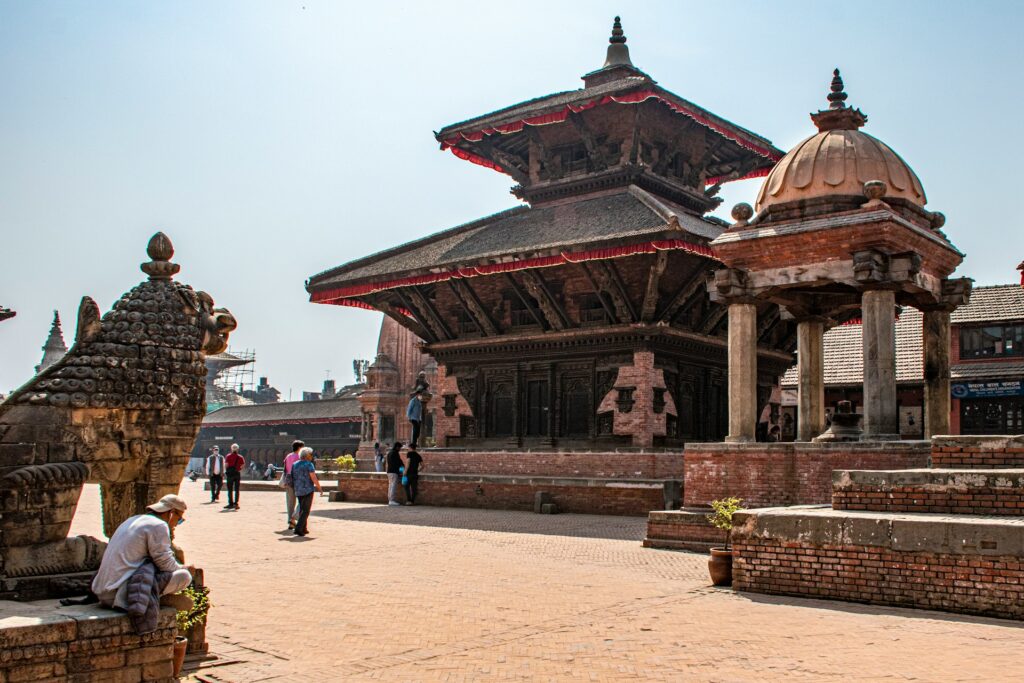
Patan Durbar Square, located in the city of Lalitpur (the “City of Beauty”) just south of Kathmandu, is widely considered the most artistically refined of the three royal squares. Dating to the 3rd century BC according to some sources, Patan claims to be the oldest Buddhist city in the Kathmandu Valley. The square showcases the zenith of Newari architecture and metalwork, making it one of the most photographed UNESCO sites Nepal offers.
The architectural masterpiece of Patan Durbar Square is the Krishna Mandir (Krishna Temple), a unique Shikhara-style stone temple built entirely without wood or metal fasteners. Completed in 1637, its three stories feature exquisite stone carvings depicting scenes from the Hindu epics Ramayana and Mahabharata, functioning as an “outdoor library” of mythology carved in stone. The square’s three main palace courtyards—Mul Chowk, Sundari Chowk, and Keshav Narayan Chowk—contain stunning examples of stone water spouts (hiti), sunken baths (tushahity), and gilded doors and windows that demonstrate unparalleled craftsmanship.
The Patan Museum, housed in a restored section of the palace, ranks among South Asia’s finest museum collections with exceptional bronze statues, religious artifacts, and explanatory exhibits that provide context for understanding Nepal cultural heritage sites. The museum’s exhibits on Hindu and Buddhist iconography, metalworking techniques, and historical context transform casual sightseeing into deep cultural understanding, making it essential for appreciating the broader significance of world heritage sites in Nepal.
Bhaktapur Durbar Square – Medieval Time Capsule
Bhaktapur Durbar Square, located in the ancient city of Bhaktapur (about 13 kilometers east of Kathmandu), preserves the most authentic medieval atmosphere of the three royal squares. Less affected by modern development than Kathmandu or Patan, Bhaktapur maintains traditional lifestyles, brick-paved streets, and artisan communities practicing centuries-old crafts. Walking through Bhaktapur Durbar Square feels like stepping directly into the 15th century, making it perhaps the most atmospheric of all UNESCO sites Nepal.
The square’s signature structure is the 55-Window Palace, built in 1427, featuring extraordinary woodwork including the famous 55 intricately carved windows that give the palace its name. The Golden Gate (Sun Dhoka), crafted in 1754, represents the pinnacle of Nepalese repousse metalwork—the gilded copper entrance adorned with divine and mythical figures glows brilliantly in sunlight. Adjacent to the Golden Gate, the Palace of 55 Windows and the Art Gallery house collections of thangka paintings, manuscripts, and royal artifacts that illustrate courtly life during the Malla period.
Religious structures at Bhaktapur Durbar Square include the Taleju Temple, Shiva temples, and the distinctive octagonal Chyasalin Mandap pavilion. The nearby Pottery Square and Taumadhi Square (with the towering Nyatapola Temple) extend Bhaktapur’s heritage zone beyond the Durbar Square proper, demonstrating how Newari architecture and urban planning created integrated cultural landscapes throughout the valley.
The Great Buddhist Stupas
Buddhism arrived in Nepal during Buddha’s lifetime (6th century BC) and flourished under royal patronage, creating two of the most spiritually significant Hindu Buddhist sites Nepal offers. The valley’s great stupas represent architectural, spiritual, and cultural centers where Tibetan Buddhism particularly thrives, maintained by refugee communities who fled Tibet after 1959.
Swayambhunath Stupa – The Monkey Temple
Swayambhunath Stupa, perched atop a hillock west of Kathmandu, represents the oldest Buddhist monument in the Kathmandu Valley with origins dating to the 5th century AD (though legend claims it as 2,000 years old). Known popularly as the “Monkey Temple” due to the numerous holy monkeys inhabiting the forested hillside, Swayambhunath functions as one of the most iconic UNESCO sites Nepal with its all-seeing Buddha eyes painted on the golden cube crowning the white dome visible across the entire valley.
The stupa itself rises majestically from a massive circular mandala platform, its white hemisphere symbolizing the world while the golden tower represents the elements of earth, water, fire, air, and ether ascending toward enlightenment. The painted eyes of Buddha gaze in all four cardinal directions, symbolizing Buddha’s omniscient wisdom. Prayer flags flutter constantly in the breeze, carrying mantras across the valley, while pilgrims circumambulate the stupa clockwise spinning prayer wheels—a meditative practice central to Tibetan Buddhism that makes visiting Hindu Buddhist sites Nepal an active spiritual encounter rather than passive sightseeing.
The 365 steep stone steps ascending to Swayambhunath from the eastern entrance test visitors’ fitness while offering increasingly spectacular views of Kathmandu city and the surrounding valley. The hilltop complex contains numerous smaller shrines, temples, a monastery, and the Hariti Temple (dedicated to the goddess of smallpox and protector of children). Swayambhunath’s position overlooking the valley creates sunset views that rank among the most memorable Kathmandu Valley UNESCO experiences, as the setting sun illuminates the Himalayas to the north while the valley’s ancient cities glow below.
Boudhanath Stupa – Tibetan Buddhist Heart
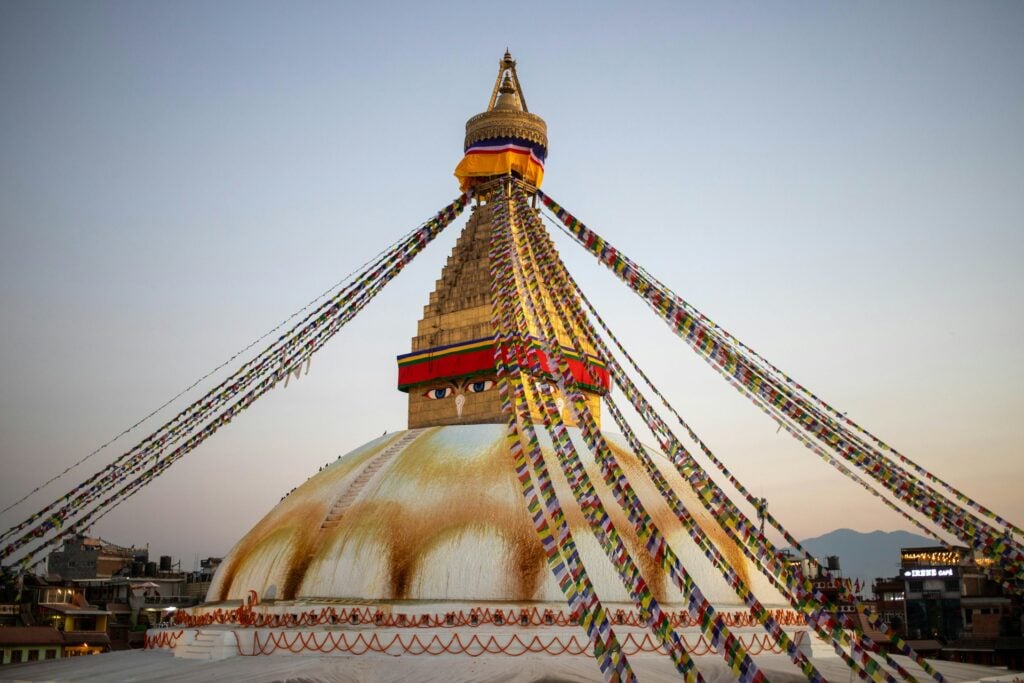
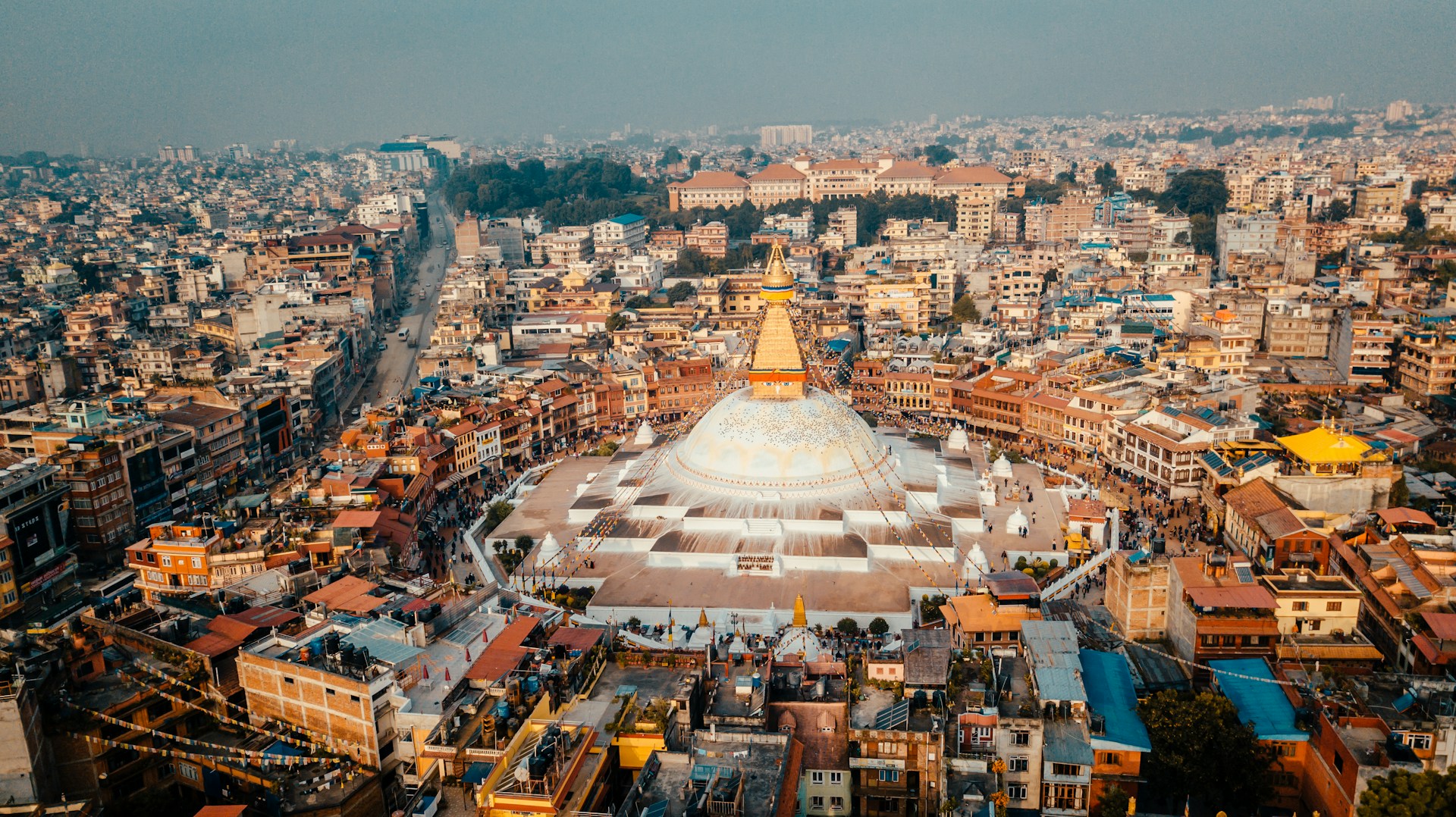
Boudhanath Stupa, located on the northeastern outskirts of Kathmandu, stands as the largest spherical stupa in Nepal and one of the largest in South Asia. Built in the 14th century (though possibly on the foundations of an earlier structure from the 5th century), Boudhanath serves as the spiritual center of Nepal’s Tibetan Buddhist community and the primary pilgrimage site for Tibetan refugees who settled in Nepal after 1959. The stupa’s massive presence and constant devotional activity make it one of the most spiritually powerful UNESCO sites Nepal offers.
The enormous white dome rises from a stepped mandala base, topped by a gilded tower painted with the omniscient Buddha eyes watching over the valley in all four directions. Unlike Swayambhunath’s hillside setting, Boudhanath sits at ground level surrounded by a circular plaza constantly filled with pilgrims performing kora (ritual circumambulation), spinning prayer wheels, prostrating, and chanting the sacred mantra “Om Mani Padme Hum.” The profound devotional atmosphere, enhanced by butter lamps flickering in hundreds of niches around the stupa’s base and monks in maroon robes engaging in meditation and ritual, creates an intensely spiritual environment that distinguishes Boudhanath Stupa among world heritage sites in Nepal.
Surrounding the stupa, dozens of Tibetan monasteries, shops selling religious artifacts, rooftop cafes, and the constant bustle of pilgrims and monks create a vibrant Tibetan village atmosphere within Kathmandu. The monasteries host teachings, ceremonies, and festivals throughout the year—particularly during Losar (Tibetan New Year) and the full moon of December when Boudhanath becomes the focal point of elaborate Buddhist celebrations. Visiting during these festivals transforms the Boudhanath Stupa experience from architectural appreciation into full cultural immersion in living Tibetan Buddhist traditions that make Nepal’s Hindu Buddhist sites Nepal so dynamically authentic.
The Sacred Hindu Temples
Pashupatinath Temple – Nepal’s Holiest Hindu Site
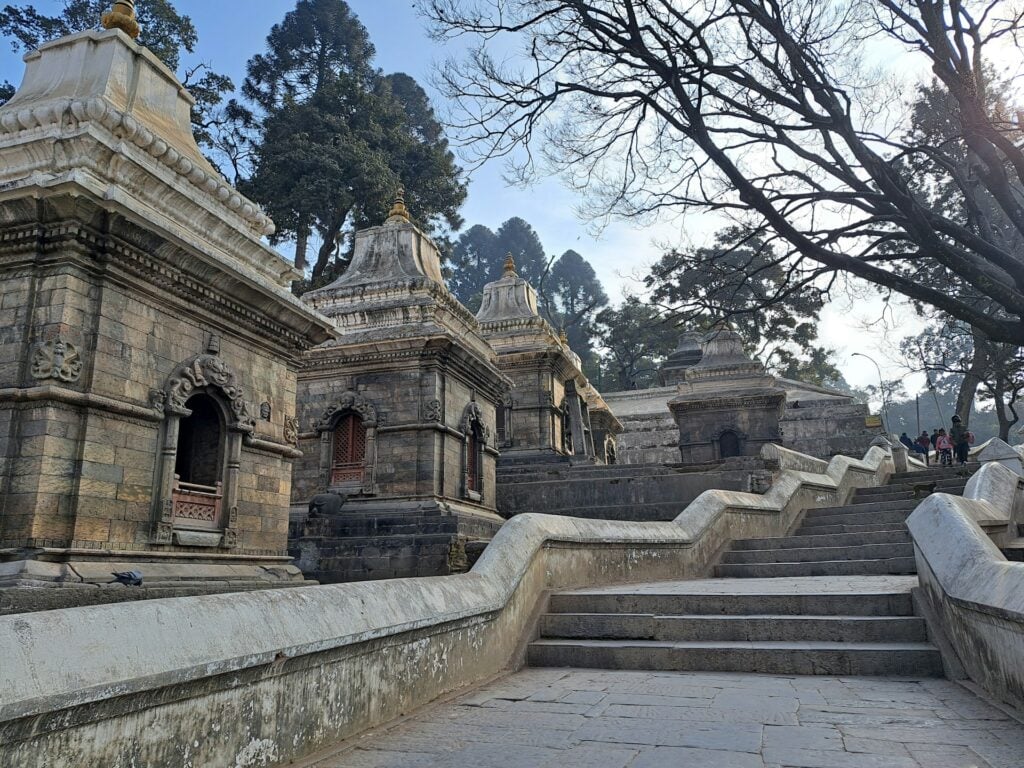
Pashupatinath Temple, situated on the banks of the sacred Bagmati River in the eastern part of Kathmandu, ranks as one of the most important Shiva temples in the Hindu world and the holiest pilgrimage site in Nepal for Hindus. Dating to at least the 5th century AD with possible earlier origins, the temple complex encompasses over 500 smaller temples, shrines, statues, and cremation ghats (platforms) along the riverbank, making it one of the most extensive and spiritually significant Nepal cultural heritage sites.
The main temple, with its distinctive golden pagoda roof and silver-plated doors, houses the sacred Shiva lingam and remains restricted to Hindus only. However, non-Hindu visitors can observe the temple exterior and witness the profound Hindu rituals occurring constantly throughout the complex. The most striking and memorable aspect of Pashupatinath Temple for many visitors is the open-air cremation ceremonies performed on stone platforms along the Bagmati River—a practice that provides direct, unfiltered encounter with Hindu beliefs about death, rebirth, and the soul’s journey. Smoke from funeral pyres, chanting priests, grieving families, and the sacred river carrying ashes toward the Ganges create powerful experiences that distinguish Hindu Buddhist sites Nepal from more sanitized heritage sites globally.
The opposite riverbank hosts rows of small meditation caves and shrines where sadhus (Hindu holy men) covered in ash and wearing orange robes meditate, pray, and occasionally interact with visitors. Observing these ascetics who have renounced worldly life provides glimpses into Hindu spirituality’s most extreme expressions. During Maha Shivaratri (the Great Night of Shiva) in February/March, over 100,000 Hindu pilgrims from Nepal and India converge on Pashupatinath Temple, transforming it into one of South Asia’s largest religious gatherings and demonstrating the living vitality of these UNESCO sites Nepal.
Changu Narayan Temple – Ancient Artistic Treasure
Changu Narayan Temple, perched on a hilltop in Bhaktapur District about 12 kilometers from Kathmandu, represents the oldest Hindu temple in the Kathmandu Valley with foundations dating to the 4th century AD. Though physically the smallest of the seven Kathmandu Valley UNESCO monument zones, Changu Narayan contains some of the finest and oldest examples of stone sculpture, wood carving, and metalwork in Nepal, making it an essential pilgrimage for anyone seriously interested in Newari architecture and ancient South Asian art.
The temple is dedicated to Lord Vishnu (in his incarnation as Narayan) and features a two-tiered pagoda roof, elaborate wooden carvings on doors, windows, and struts, and an exceptional collection of stone sculptures depicting Vishnu’s various avatars. The temple courtyard contains the famous 5th-century stone inscription—the oldest known inscription in the Kathmandu Valley—providing crucial historical evidence about the Licchavi period. Other sculptures include depictions of Vishnu riding Garuda (his eagle mount), Vishnu as the cosmic Vishvarupa, and numerous other deities carved with extraordinary skill and artistic sophistication.
What makes Changu Narayan Temple particularly special among world heritage sites in Nepal is its relatively untouched setting within a traditional Newari village where local artisans continue practicing ancient stone-carving and metalworking techniques passed down through generations. The peaceful hilltop location, surrounded by terraced fields with Himalayan views to the north, provides welcome tranquility compared to the bustling valley floor, allowing visitors to appreciate the artistic and spiritual significance without overwhelming crowds.
Lumbini – The Buddha’s Birthplace
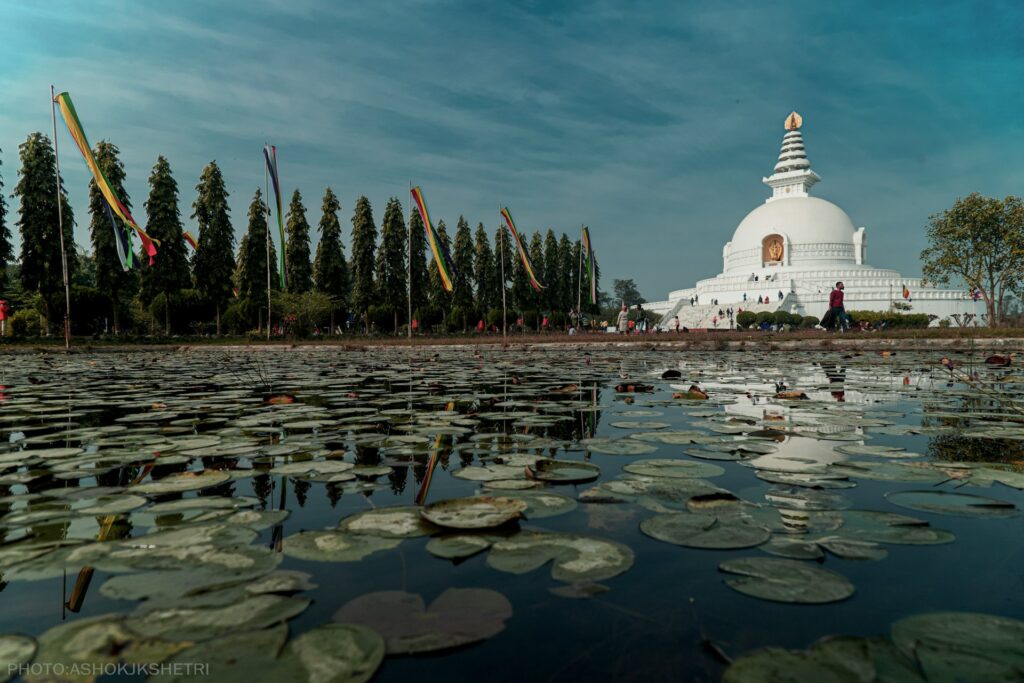
While the seven Kathmandu Valley sites represent Nepal cultural heritage sites at their most architecturally dense and culturally complex, Nepal’s second designated cultural World Heritage Site—Lumbini birthplace Buddha—holds arguably even greater religious significance as one of Buddhism’s four most sacred pilgrimage sites. Located in the Terai plains of southern Nepal near the Indian border, Lumbini marks where Queen Mayadevi gave birth to Siddhartha Gautama (who became Buddha) in 623 BC, making it over 2,600 years old and the foundational site of one of the world’s great religions.
The sacred area centers on the Maya Devi Temple, where archaeological excavations have identified the exact spot where Buddha was born—marked by a carved stone relief from the 2nd-3rd century AD depicting Buddha’s birth. Adjacent to the temple, the sacred Pushkarni Pond where Queen Mayadevi bathed before giving birth remains an active ritual bathing site for Buddhist pilgrims. The most famous monument at Lumbini birthplace Buddha is the Ashoka Pillar, erected by the Indian Emperor Ashoka in 249 BC during his pilgrimage to Lumbini. The pillar’s inscription explicitly identifies Lumbini as Buddha’s birthplace, providing crucial historical verification that elevates Lumbini beyond legendary status to confirmed historical fact—a rarity for ancient religious sites.
Beyond the sacred garden containing Maya Devi Temple and Ashoka Pillar, modern Lumbini has developed into an international Buddhist pilgrimage center featuring over 25 monasteries built by Buddhist nations from around the world—including temples in Tibetan, Thai, Myanmar, Chinese, Japanese, Korean, and even German architectural styles. This international monastery zone creates a unique opportunity to experience the diversity of Buddhist architectural and devotional traditions in a single location, making Lumbini birthplace Buddha not just a historical site but a living, evolving center of global Buddhist culture that functions as one of the most spiritually significant UNESCO sites Nepal offers.
Newari Architecture: The Artistic Foundation
Understanding Newari architecture is essential for appreciating why Kathmandu Valley UNESCO sites earned World Heritage designation. The Newars—the indigenous inhabitants of the Kathmandu Valley—developed architectural and artistic traditions between the 12th-18th centuries that represent some of humanity’s most sophisticated pre-industrial craftsmanship. Newari architecture synthesizes Hindu, Buddhist, and indigenous elements into distinctive styles that influenced temple architecture across the Himalayas, including Tibet, Bhutan, and parts of China.
Key characteristics of Newari architecture include multi-tiered pagoda temples with progressively smaller roofs creating distinctive silhouettes, extensive use of brick combined with timber framework, incredibly intricate wood carving on doors, windows, roof struts (depicting deities, mythical creatures, and erotic scenes), advanced stone sculpture techniques producing lifelike deity statues, sophisticated metalworking creating gilded copper and brass decorative elements, and complex urban planning integrating religious spaces, royal palaces, public courtyards, and residential areas into cohesive urban ensembles.
The transmission of Newari architecture occurs through hereditary craft guilds where fathers train sons in specialized skills—wood carving, stone sculpture, metalworking, brick-laying, and architectural design. This guild system, though challenged by modernization, continues operating in Bhaktapur particularly, where visitors can observe craftsmen carving intricate wooden windows and creating metal statues using traditional lost-wax casting techniques perfected centuries ago. This living craft tradition distinguishes Nepal cultural heritage sites from many world heritage sites where traditional skills have been lost, making Nepal unique in maintaining unbroken artistic lineages spanning centuries.
Visiting UNESCO Sites Nepal: Practical Guide
Best Time to Visit
The optimal period for visiting UNESCO sites Nepal is October-November (autumn) and March-April (spring) when weather conditions are ideal—clear skies, comfortable temperatures (15-25°C), and excellent Himalayan visibility. These months coincide with major festivals including Dashain (October), Tihar (November), and Holi (March), when Kathmandu Valley UNESCO sites host elaborate celebrations that provide unparalleled cultural experiences. Winter (December-February) offers fewer tourists and clear mountain views but colder temperatures, while summer monsoon (June-September) brings heavy rainfall making outdoor sightseeing challenging though cultural sites remain accessible.
Entry Fees and Permits
Foreign tourists pay entry fees at most world heritage sites in Nepal: Kathmandu Durbar Square (1,000 NPR/$7.50), Patan Durbar Square (1,000 NPR), Bhaktapur Durbar Square (1,800 NPR/$13.50), Swayambhunath (200 NPR), Boudhanath (400 NPR), and Pashupatinath (1,000 NPR). Changu Narayan and Lumbini have no entry fees. SAARC nationals pay reduced rates. Consider purchasing combination tickets if available, and keep tickets as some sites allow re-entry within specified periods.
Recommended Itinerary
A comprehensive tour of UNESCO sites Nepal in Kathmandu Valley requires minimum 3-4 full days. Suggested itinerary: Day 1 covers Kathmandu Durbar Square and Swayambhunath; Day 2 explores Pashupatinath, Boudhanath, and Changu Narayan; Day 3 visits Patan Durbar Square; and Day 4 focuses on Bhaktapur Durbar Square. Adding Lumbini requires an additional 2-3 days including travel (300 kilometers from Kathmandu, accessible by flight or overnight bus). Hiring knowledgeable local guides significantly enhances understanding of complex religious iconography, architectural details, and cultural practices at these Nepal cultural heritage sites.
Preservation Challenges and Restoration Efforts
The catastrophic April 2015 earthquake (magnitude 7.8) severely impacted Kathmandu Valley UNESCO sites, destroying or damaging dozens of temples, palaces, and monuments. The earthquake triggered emergency conservation efforts supported by UNESCO, national governments, and international organizations to document damage, stabilize structures, and begin reconstruction using traditional materials and techniques. Restoration follows strict guidelines requiring original materials (hand-made bricks, seasoned timber), traditional construction methods, and skilled craftsmen trained in historical techniques, making progress slow but ensuring authenticity.
Beyond earthquake damage, UNESCO sites Nepal face ongoing challenges from urbanization, pollution, inadequate maintenance funding, loss of traditional craft skills, and overtourism. Kathmandu Valley was listed on UNESCO’s Danger List (2003-2007) due to uncontrolled development and loss of authenticity before removal following improved conservation measures. Continued vigilance, adequate funding, community involvement, and sustainable tourism practices remain essential for preserving these irreplaceable world heritage sites in Nepal for future generations.
Conclusion: Nepal’s Living Cultural Heritage
The UNESCO sites Nepal portfolio represents far more than architectural monuments or historical artifacts—these are living cultural landscapes where ancient traditions, religious devotion, artistic excellence, and community identity continue thriving amid 21st-century challenges. The seven Kathmandu Valley UNESCO monuments, which you can visit on your Custom Trip to Nepal with Acqua Travels demonstrate humanity’s capacity for creating urban environments where religious tolerance, artistic sophistication, and communal harmony flourish, while Lumbini birthplace Buddha connects visitors directly to Buddhism’s origins and global spiritual legacy.
Visiting Nepal cultural heritage sites provides transformative experiences impossible elsewhere—witnessing Hindu cremation rituals at Pashupatinath, joining Buddhist pilgrims circumambulating Boudhanath, observing the Living Goddess at Kathmandu Durbar Square, and standing where Buddha was born at Lumbini creates profound connections to South Asian spiritual and cultural traditions spanning millennia. The extraordinary Newari architecture and artistic achievements preserved at these sites demonstrate that small societies can produce civilizational contributions rivaling much larger empires when creativity, skill, and religious devotion align.
For travelers seeking authentic cultural encounters beyond superficial sightseeing, the world heritage sites in Nepal deliver unparalleled depth, beauty, and spiritual resonance that justify Nepal’s reputation as one of Asia’s most culturally rich destinations. These Hindu Buddhist sites Nepal embody religious coexistence, artistic mastery, and living heritage in ways increasingly rare in our rapidly modernizing world, making their preservation and appreciation essential not just for Nepal but for global cultural heritage.
Recent Posts