
Sacred Bhutan: Dzongs, Monasteries & the Spiritual Heart of the Himalayas
Introduction: Bhutan as a Living Mandala
Perched on the eastern edge of the Himalayas, Bhutan is one of the few places where ancient Buddhist kingdoms still shape everyday life, and mountains are crowned not by luxury resorts but by whitewashed fortress monasteries.
From river-side dzongs in Bhutan to cliff-hugging hermitages and incense-filled lhakhangs, the entire country feels like a living mandala, designed for contemplation and devotion rather than consumption.
For travelers seeking Bhutan spiritual travel, this tiny kingdom offers more than sightseeing: it invites you into the world of Himalayan Buddhism, Guru Rinpoche legends and monastic life woven seamlessly into national identity.
Understanding Dzongs: Bhutan’s Fortress Monasteries
Any journey into Bhutan spiritual travel begins with understanding the dzongs—huge whitewashed fortresses that dominate every valley and serve as both religious and administrative hearts of each district.
Historically, dzongs in Bhutan were built along strategic ridgelines and river confluences as military strongholds protecting trade routes and borders, while simultaneously housing monastic communities who guarded the kingdom’s spiritual well‑being.
Inside these fortress monasteries, courtyards separate the secular offices from temple complexes, with an inner utse (central tower) often holding the most sacred relics and richly painted prayer halls that illustrate Bhutanese architecture at its most intricate.
Bhutanese Architecture and Sacred Design
Dzongs in Bhutan are renowned for their massive sloping walls, red‑banded rooflines and golden spires, all constructed without nails using traditional joinery techniques passed down through generations.
Every feature of Bhutanese architecture is symbolic: wide courtyards host tshechu festivals, carved window frames represent protective deities and painted mandalas guide practitioners on their inner journey, turning these buildings into three‑dimensional teaching tools for Himalayan Buddhism.
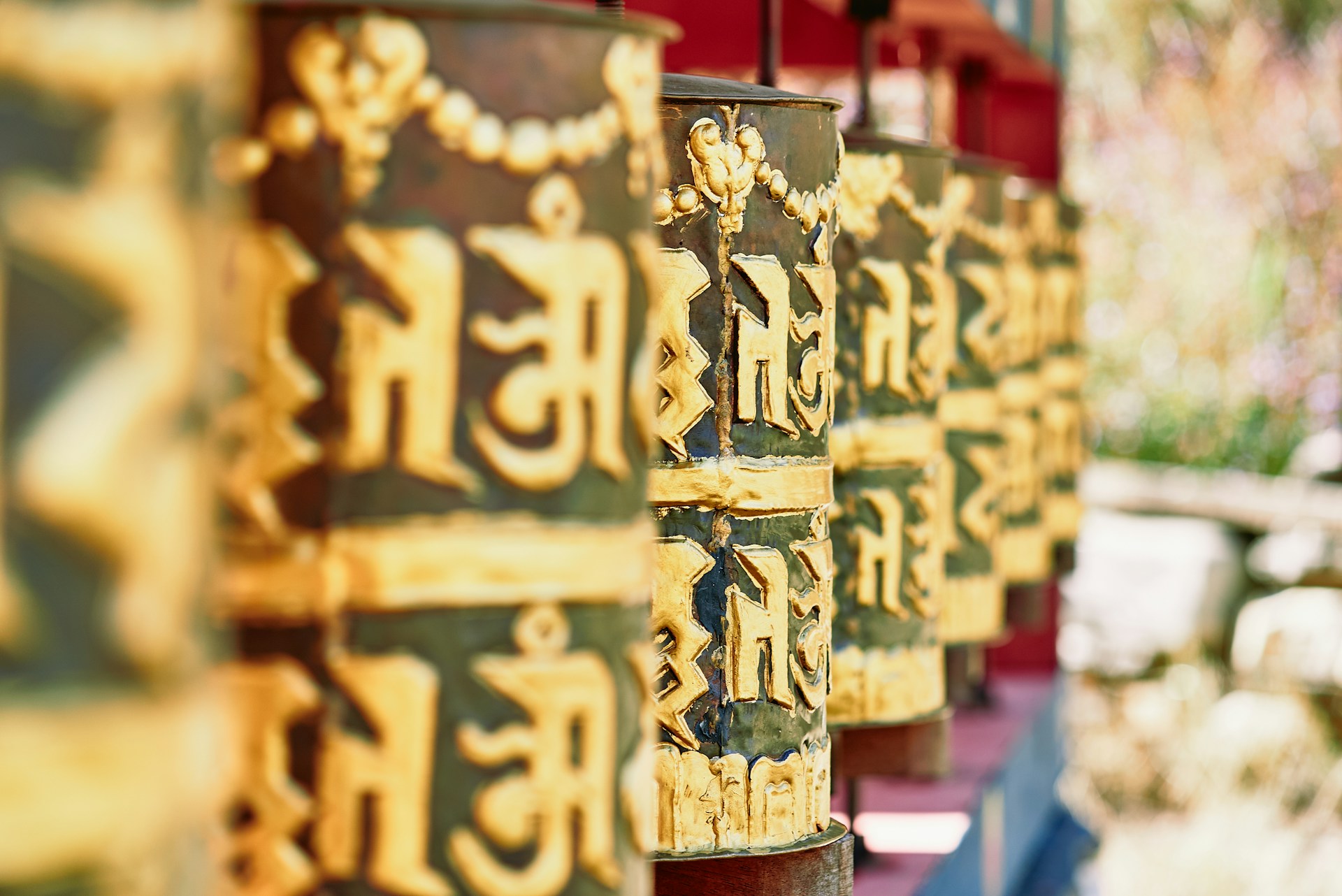
For travelers interested in Bhutan spiritual travel, simply walking through these spaces—circumambulating prayer wheels, listening to low chanting from assembly halls—feels like stepping into a centuries‑old sacred choreography still fully alive today.
Paro Dzong and Tiger’s Nest: Guardians of the Paro Valley
Paro Rinpung Dzong: Fortress on a Heap of Jewels
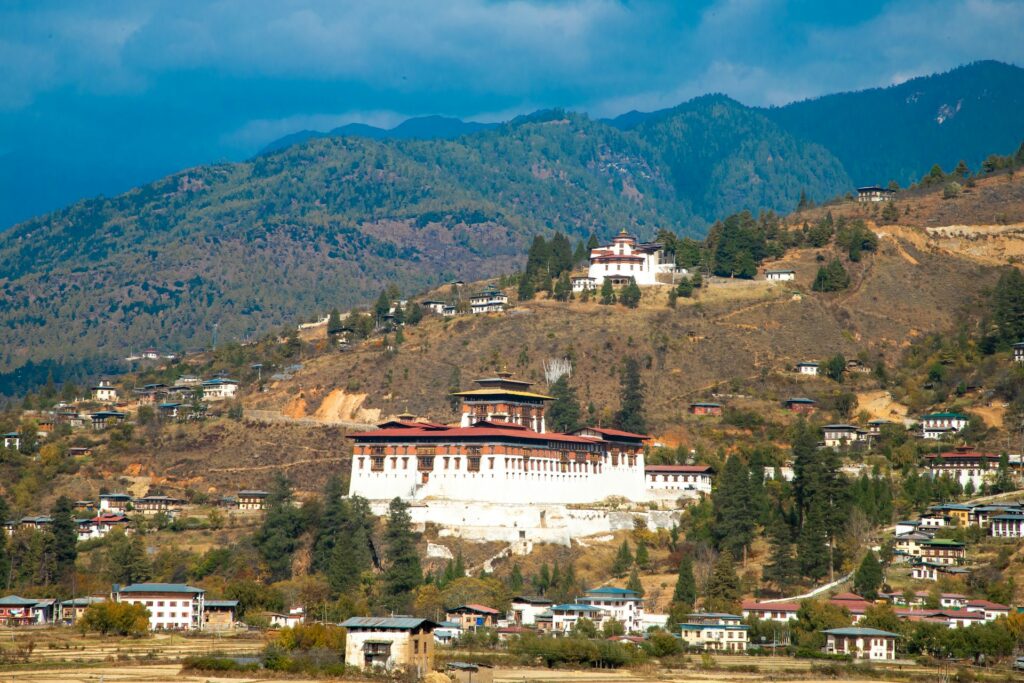
Paro Rinpung Dzong, whose name translates as “Fortress on a Heap of Jewels,” rises above the Paro River on a gentle ridge, its cantilever bridge and central watchtower forming one of the most iconic silhouettes among dzongs in Bhutan.
Within its walls, murals depict the life of the Buddha, protective deities and scenes from Buddhist cosmology, while monks move quietly between lhakhangs and administrative officials conduct district business, embodying the dual role of fortress monasteries.
The Paro Tsechu festival each spring transforms the dzong’s courtyards into swirling seas of brocade robes and ritual masks, making it a highlight of any Bhutan Buddhist sites itinerary.
Tiger’s Nest Monastery: Bhutan’s Cliffside Icon
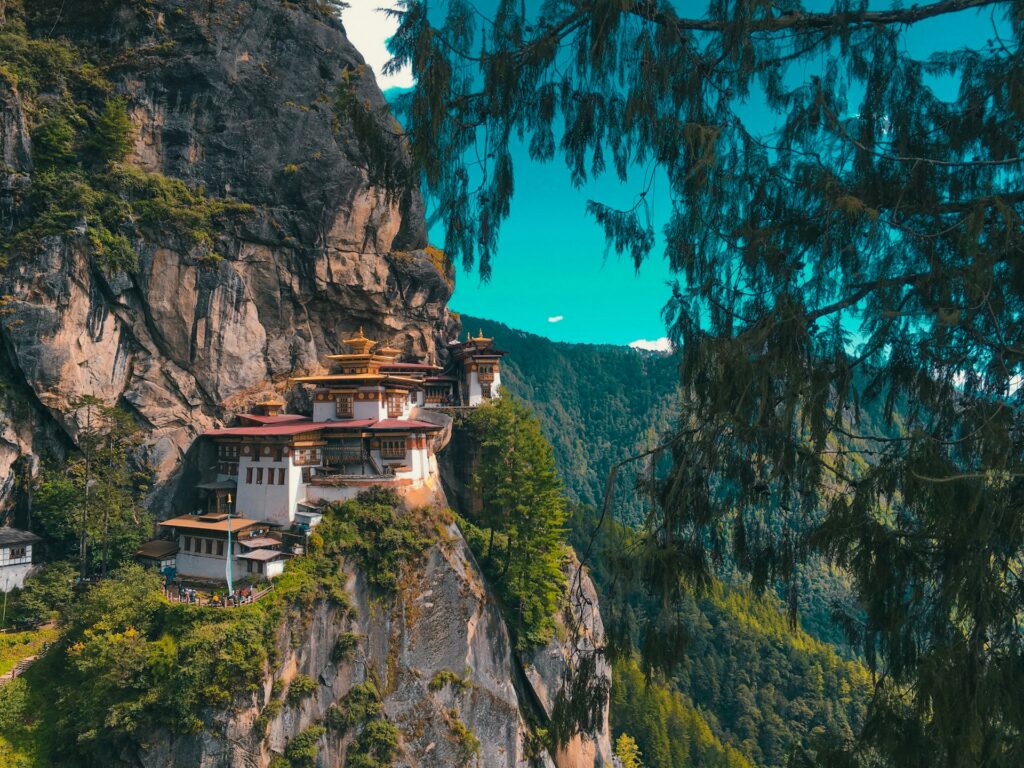
No Bhutan spiritual travel journey is complete without the steep pilgrimage to Paro Taktsang, better known as Tiger’s Nest Monastery, clinging to a vertical cliff 900 meters above the valley floor at around 3,120 meters elevation.
According to legend, Guru Rinpoche—Padmasambhava, the tantric master who brought Buddhism to Bhutan—flew here on the back of a tigress and meditated in a cave that later became the heart of the monastery complex.
Today, the 2–3 hour ascent through pine forest, fluttering prayer flags and viewpoints offers one of the most powerful experiences in Bhutan spiritual travel, blending physical effort, awe‑inspiring scenery and deep mythic resonance.
Punakha Dzong: Palace of Great Happiness
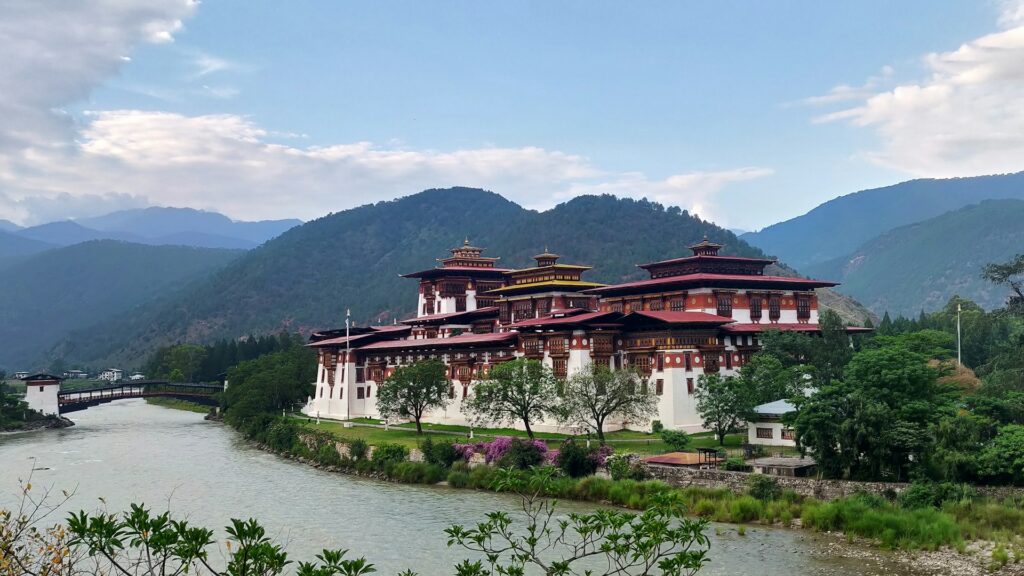
Punakha Dzong, often called the “Palace of Great Happiness,” stands at the confluence of the milky‑blue Pho Chhu and jade‑green Mo Chhu rivers, arguably the most photogenic of all ancient fortresses in Bhutan.
Once the seat of Bhutan’s government and still the winter residence of the central monastic body, this dzong is a key stop on any Bhutan pilgrimage, with its inner courtyards filled with towering cypress trees, richly painted lhakhangs and a relic-filled temple dedicated to the kingdom’s unifier, Zhabdrung Ngawang Namgyal.
Visiting Punakha Dzong during spring’s purple jacaranda bloom or during Punakha Drubchen and Tshechu festivals offers one of the purest glimpses into monastic life in Bhutan, as masked dancers and chanting monks reenact historical battles and spiritual stories.
Tashichho Dzong: Thimphu’s Spiritual and Political Heart
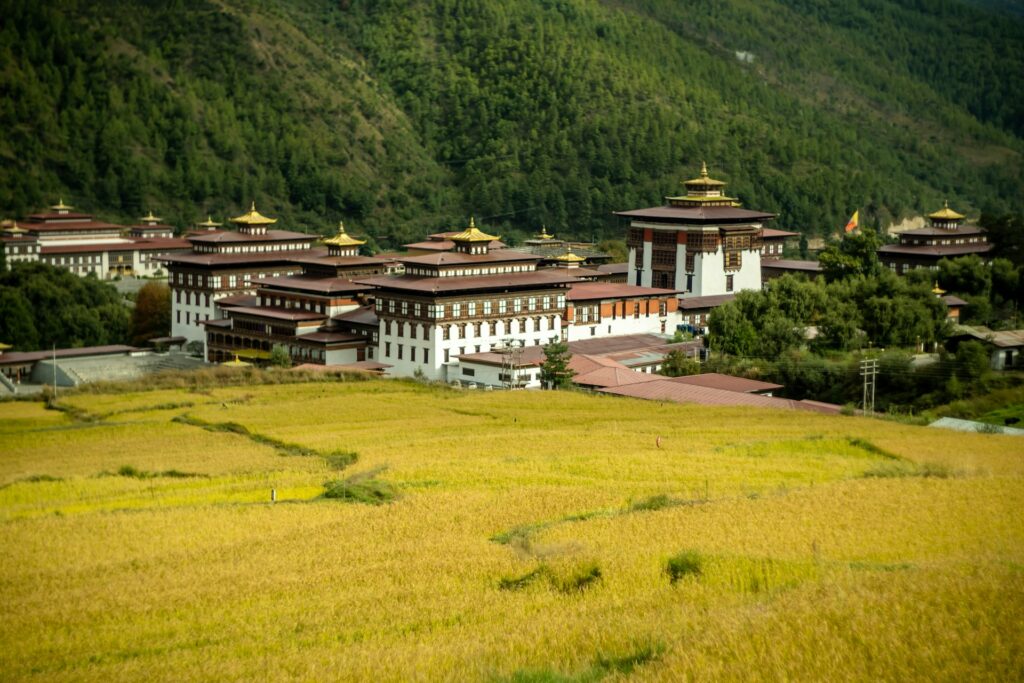
In the capital Thimphu, Tashichho Dzong serves as both the administrative seat of the government and the summer residence of the Je Khenpo, Bhutan’s chief abbot, perfectly illustrating the fusion of temporal and spiritual power in Himalayan Buddhism.
By day, the dzong’s offices host meetings and civic functions, while at dusk its monastic courtyards fill with the deep sound of long horns and the glow of butter lamps as monks gather for evening prayers.
For visitors focused on Bhutan spiritual travel, timing a visit during the Thimphu Tshechu in autumn allows you to witness sacred cham dances, where elaborately masked performers embody wrathful and peaceful deities to purify the land and its people.
Lhakhangs and Goembas: Bhutan’s Intimate Sacred Spaces
Beyond the grand dzongs in Bhutan, countless smaller lhakhangs (temples) and goembas (monastic retreats) dot hillsides, village edges and hidden valleys, forming a web of sacred sites Bhutanese people visit throughout their lives.
These lhakhangs in Bhutan often predate the dzongs and house some of the country’s oldest statues, wall paintings and terma (hidden treasure teachings) associated with Guru Rinpoche sites, making them essential stops for pilgrims seeking specific blessings.
Goembas function as places of long retreat, where monks and nuns withdraw from village life for extended meditation, giving travelers respectful windows into monastic life in Bhutan when visited with local guides.
Key Bhutan Buddhist Sites for Pilgrims and Seekers
For travelers designing a focused Bhutan spiritual travel itinerary, several Bhutan Buddhist sites stand out as anchors for deeper journeys into Himalayan Buddhism.
Bumthang Valley: The Spiritual Heartland
Bumthang, often called Bhutan’s spiritual heartland, is home to some of the most important Guru Rinpoche sites, including Kurjey Lhakhang, where his body imprint is said to be preserved in a rock cave, and Jambay Lhakhang, one of Bhutan’s oldest temples.
Monasteries in Bhutan’s Bumthang region also host intimate fire rituals, local festivals and hillside hermitages, making it an ideal base for multi‑day Bhutan pilgrimage routes.
Gangtey Monastery and Phobjikha Valley
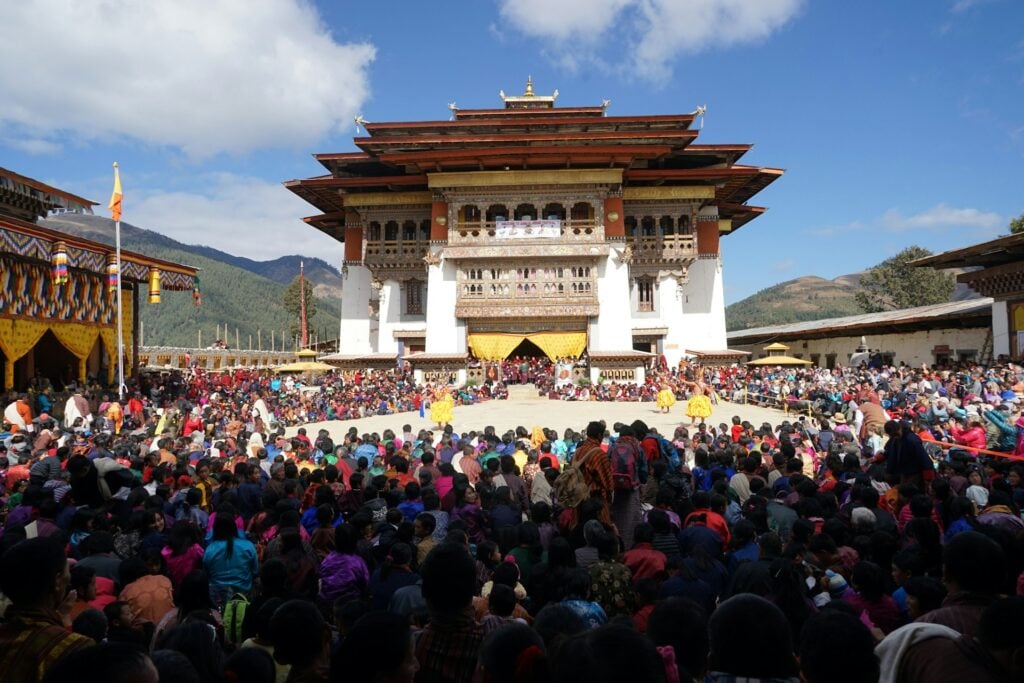
Gangtey (Gantey) Monastery, a 17th‑century Nyingma institution perched above the glacial Phobjikha Valley, offers a serene counterpoint to the busier western dzongs in Bhutan.
Each winter, endangered black‑necked cranes migrate into the valley and circle the monastery three times before landing, a ritual locals interpret as an auspicious sign, adding natural wonder to Bhutan spiritual travel during November to February.
Monastic Life in Bhutan: Daily Rhythm and Retreat
Stepping into Bhutan’s monasteries reveals how completely monastic life in Bhutan still shapes village rhythms, from dawn conch shells calling monks to prayer to evening drums echoing across valleys.
Young novices study Buddhist philosophy, ritual instruments and calligraphy, while senior monks lead puja ceremonies, perform protective rituals for families and maintain the sacred spaces that anchor Bhutan pilgrimage routes.
Many monasteries in Bhutan also host long‑term retreats, where practitioners spend months or years in silent practice, emerging only for major rituals—an aspect of Himalayan Buddhism that deeply enriches the atmosphere of Bhutan Buddhist sites even when visitors only glimpse it at a distance.
Etiquette at Sacred Sites in Bhutan
Because Bhutan spiritual travel centers on active places of worship, respectful behavior is essential when visiting dzongs in Bhutan, monasteries and lhakhangs.
- Dress modestly: Wear long pants or skirts and covered shoulders; locals often add a jacket or traditional gho/kira when entering dzongs.
- Remove hats and shoes: Hats should be taken off within courtyards, and shoes removed before entering any temple or lhakhang interior.
- Ask before photographing: Many inner shrines and statues are not to be photographed; always follow your guide’s instructions.
- Move clockwise: When spinning prayer wheels or circumambulating temples, walk clockwise in harmony with local practice.
- Silence and phones: Keep voices low, switch phones to silent and avoid interrupting rituals, especially during pujas and festivals.
Planning Your Bhutan Spiritual Travel Itinerary
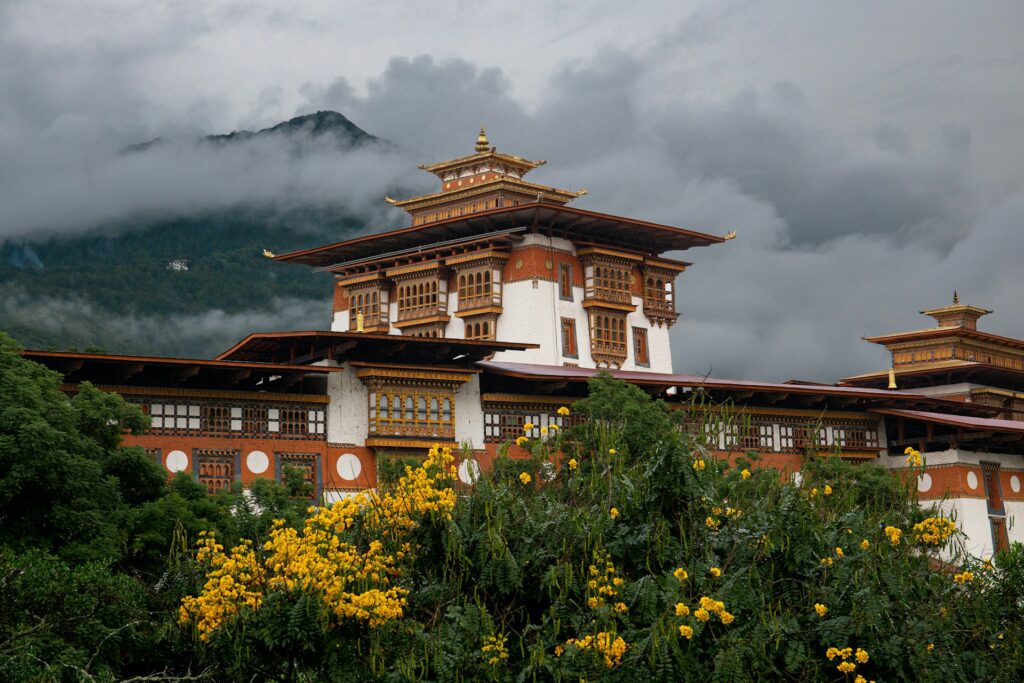
Most first‑time Bhutan spiritual travel itineraries follow the west‑to‑central corridor, linking Paro, Thimphu, Punakha, Gangtey and Bumthang so you can experience both headline dzongs and lesser‑known lhakhangs.
- 5–7 days: Focus on Paro Dzong, Tiger’s Nest Monastery, Tashichho Dzong in Thimphu and Punakha Dzong, with a day or two exploring rural lhakhangs.
- 8–12 days: Add Gangtey Monastery and Phobjikha Valley, plus one or two days in Bumthang to explore Guru Rinpoche sites and ancient fortresses in Bhutan’s interior.
- Festival‑focused trips: Plan around major tshechus in Paro, Thimphu, Punakha or Bumthang to witness sacred dances that are themselves considered moving mandalas and teachings.
Working with local guides experienced in Bhutan spiritual travel helps ensure you visit monasteries at appropriate times, understand local rituals and contribute respectfully to communities that maintain these sacred sites Bhutan treasures.
Final Reflections: Walking Gently in a Living Sacred Landscape
Unlike many destinations where temples are relics, Bhutan remains a rare place where fortress monasteries still anchor government, education and community life, making Bhutan spiritual travel feel more like entering a living lineage than touring monuments.
From the riverside glow of Punakha Dzong at sunset to dawn chants drifting from mountain goembas, the country’s dzongs in Bhutan, monasteries and lhakhangs invite quiet participation rather than spectacle.
As you design your own Bhutan pilgrimage—choosing which Bhutan Buddhist sites to prioritize and how much time to spend in each valley—remember that the real gift of these sacred sites Bhutan guards so carefully is the chance to slow down, listen deeply and carry a piece of Himalayan Buddhism’s gentle resilience back into your everyday life.
Related Posts